
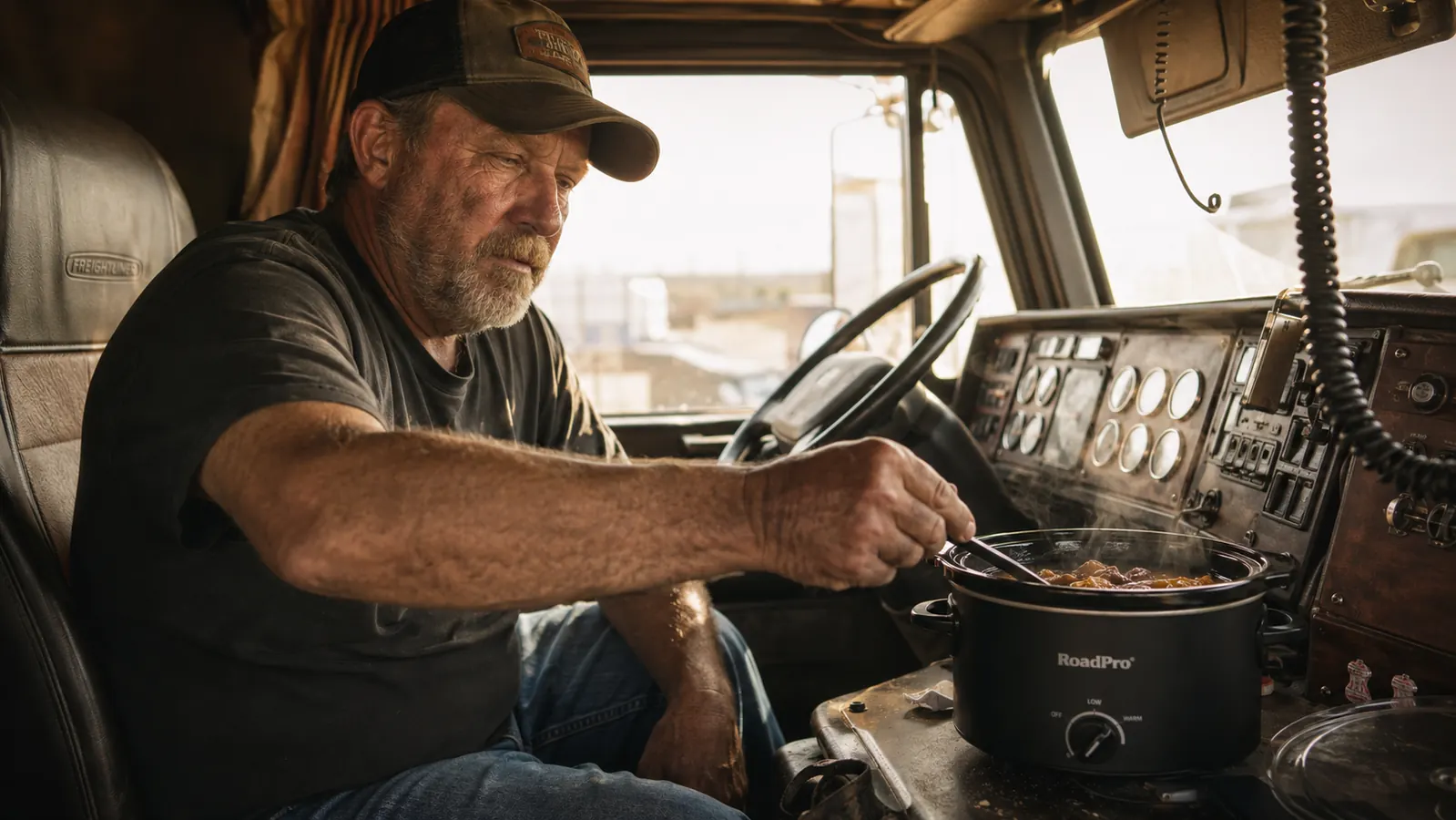
I've been eating truck stop garbage for longer than I want to admit. Greasy eggs at 4 AM, whatever passes for a burger at a fuel desk, $14 wraps that taste like the cellophane they came in. After twenty-two years on the road, that diet catches up with you. My doctor made it clear last spring that I needed to start eating real food. My wife agreed, loudly. So I bought the RoadPro RPSL-350 12V slow cooker off Amazon, tossed it behind the passenger seat of my Freightliner Cascadia, and gave it three months to prove itself on runs from Atlanta to Columbus and back.
I'll tell you right now: I still have it. It's still in the truck. That's probably the most honest endorsement I can give anything.
The Quick Verdict
A simple, reliable 1.5-quart slow cooker that runs off your cigarette lighter and actually cooks real food. The cord is too short, the lid clamps are fiddly, and it doesn't get hot enough for certain cuts of meat. But for chili, stew, and pulled chicken, it does exactly what it says.
Amazon Check Today's Price →Still eating at truck stops every night? This $32 appliance plugs into your lighter and cooks while you drive.
The RoadPro RPSL-350 runs on 12V DC power from your cigarette lighter. No inverter needed. Set it up before your pre-trip, eat when you roll into your stop.
Amazon Check Today's Price on Amazon →How I've Used It
My setup is straightforward. Friday nights I load up a small soft-sided cooler with whatever my wife packed: a couple of pounds of ground beef or chicken thighs, canned diced tomatoes, a bag of dried beans that she soaked overnight, maybe some sweet potatoes. Monday morning before I leave the yard, I dump ingredients into the RoadPro pot, secure the lid with both clamps, plug the cord into my lighter socket, and set it on the floor behind the passenger seat where it can't tip. By the time I'm four or five hours into the run, I've got actual food waiting for me at the truck stop.
The cooker holds 1.5 quarts, which is plenty for one driver. I get two meals out of a batch most days. Monday's chili becomes Tuesday's chili with a couple of eggs scrambled in. I run it three or four times a week, maybe 12 to 14 hours of cumulative cook time per week. Over three months that's somewhere north of 150 hours on this thing, across multiple runs, multiple ingredient combinations.
I've also had it loaded up on rough stretches of I-70 through western Colorado, which is where the lid clamps earn their keep. More on that later.
What It Actually Cooks Well
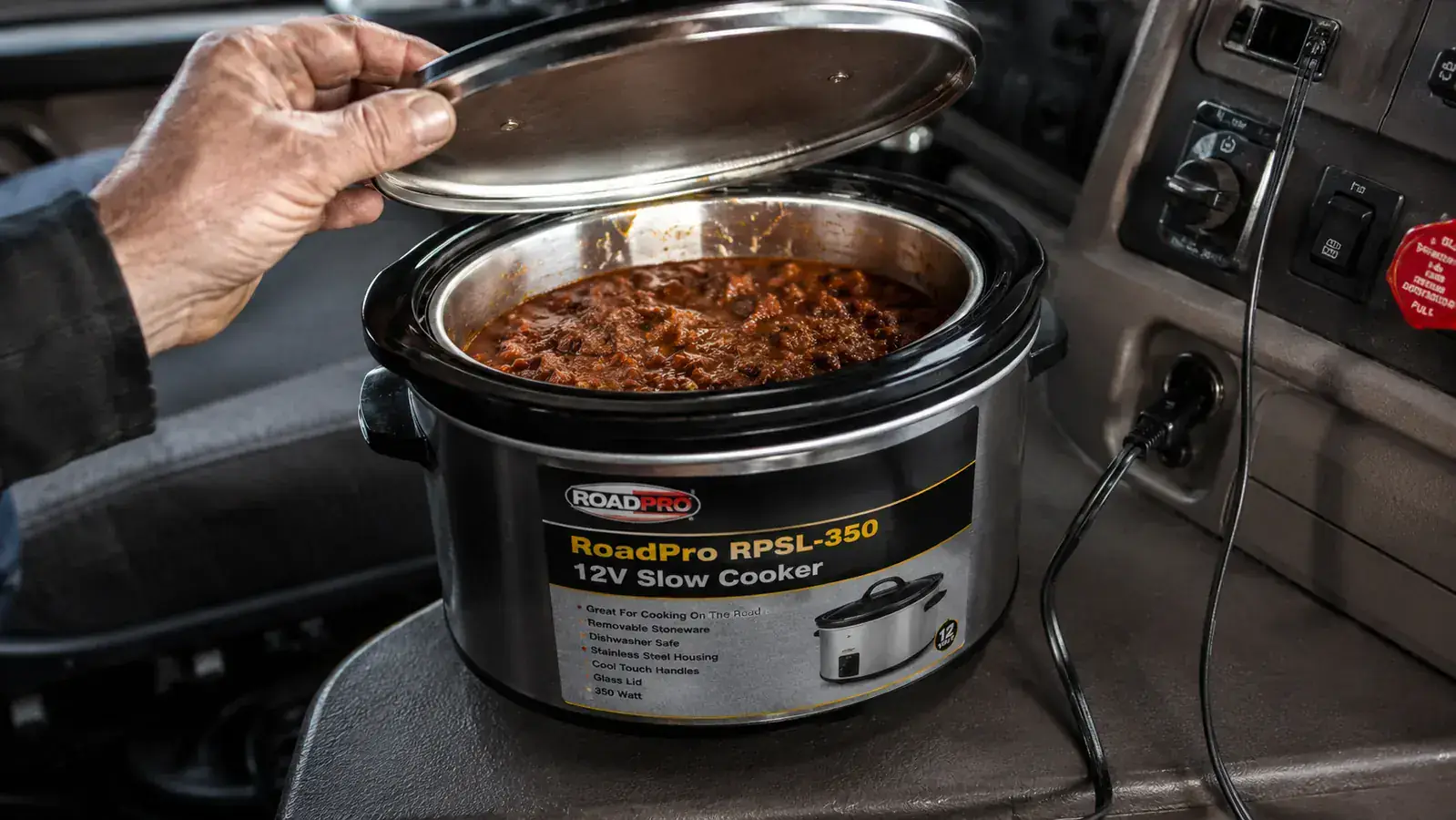
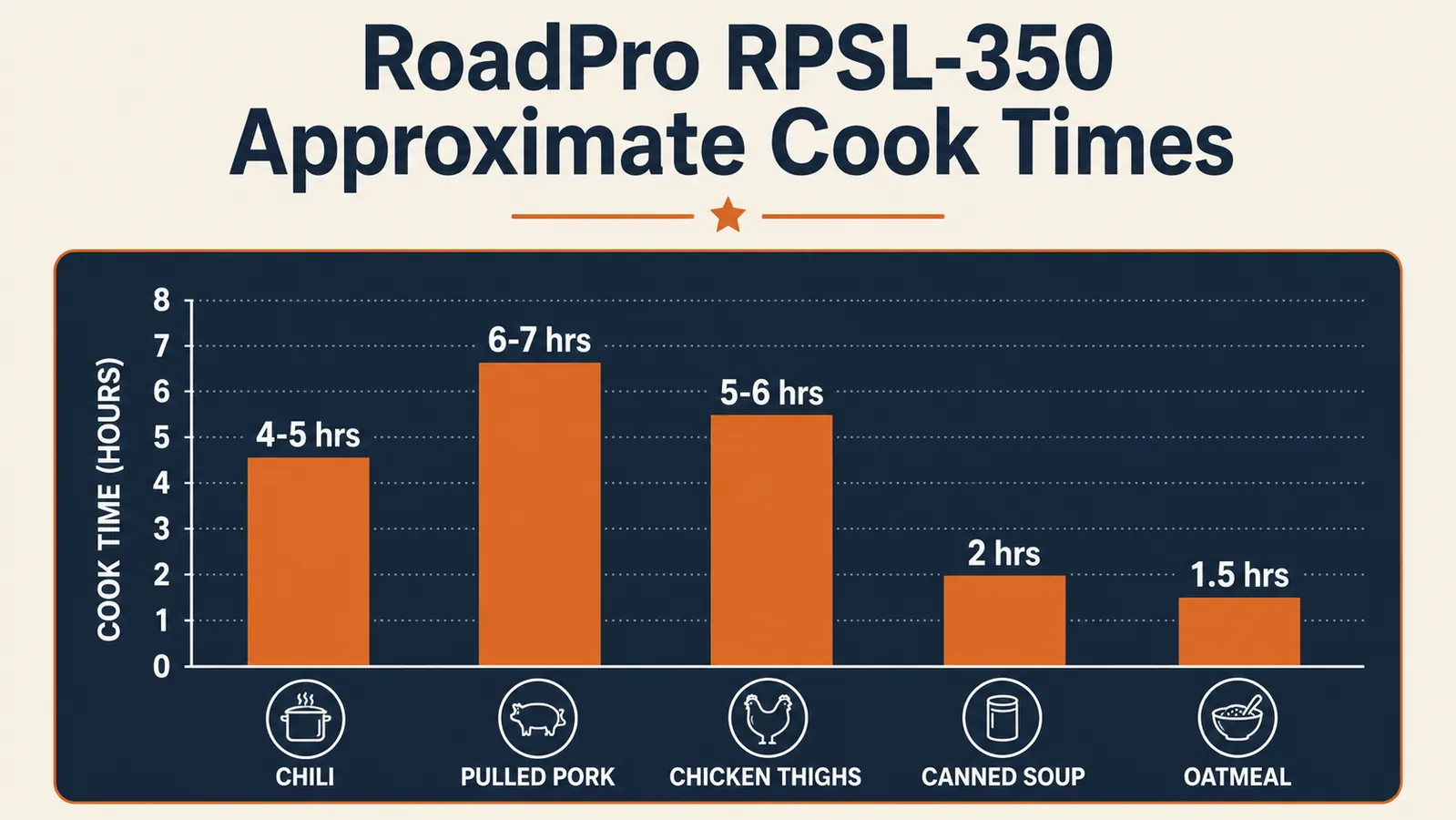
Chili is the king of 12V slow cooking, and the RoadPro handles it well. Ground beef or ground turkey, a can of diced tomatoes, a can of kidney beans, chili powder, cumin, and a diced onion. Four to five hours on the road and it's done. Thick, hot, and better than anything I've eaten at a fuel desk. I've made this a dozen times without it going sideways on me once.
Pulled chicken works great too. Bone-in chicken thighs with some chicken broth, garlic, and a little hot sauce. Six hours and the meat falls off. I shred it with a fork right in the pot. I've made pulled pork twice with a small pork shoulder, and it came out right both times but needed the full seven hours. If you're doing shorter hauls under four hours, stick to chicken or canned soup because the larger cuts just won't finish.
Canned soup is almost a cheat, but I'm not judging. Dump a can of condensed chicken noodle in, add a little water, two hours later you've got hot soup. Oatmeal with some brown sugar and dried fruit runs about 90 minutes. These are the quick meals when I don't have time for a full batch. I've seen other drivers use it for hard-boiled eggs by submerging them in water, which works but takes about two hours and is a little fussy.
Chili four times a week beats four truck stop visits every week of the year. The math on that isn't complicated.
What Doesn't Work
Anything that needs a rolling boil isn't happening. This cooker runs at a lower temperature than a home slow cooker on the 'low' setting, because it's pulling from a 12V DC outlet instead of a 110V wall plug. Pasta needs boiling water. Rice needs a consistent temperature that the RoadPro doesn't quite maintain. I tried white rice twice, and both times I got undercooked, gluey mush. Skip pasta and rice entirely. Bring a bag of tortillas or a loaf of bread instead.
Large roasts are marginal. I tried a beef chuck roast once, about two pounds, and after eight hours it was technically safe to eat but the texture was off. A full pork shoulder over two pounds is pushing it. Stick to boneless chicken thighs, ground meat, beans, and soups. Cut your larger pieces into chunks before you load it up and you'll have better results.
Dairy doesn't play nice in slow cookers in general, and this one is no different. I tried a creamy chicken soup with a can of cream of chicken soup. It separated and got a strange texture. Same with sour cream. Add dairy right before you eat, not while it cooks.
The Real Warts: Cord, Lid Clamps, and the Chili Incident
Let me be straight about the things that annoyed me. The cord is short. It's roughly four feet, which means you've got limited placement options in a cab. My lighter socket is on the center console, so I can reach the floor behind the passenger seat, but if your socket is lower or in a different position you might be stretching the cord in a direction you don't want. An extension cord for 12V power exists, but it adds resistance and can affect performance. Ideally RoadPro would give you another two feet of cord. They didn't.
The lid clamps are a little stiff when they're new and a little loose once they've been used a hundred times. You've got two clamps that lock the lid down to keep spills contained on a moving truck. When they're new, getting them seated takes two hands and some patience. After a few weeks they loosen up and you need to check them every time because a loose clamp on a highway pothole means chili on your floor mat. I tightened the clamps by bending the locking tab back slightly with pliers, which fixed the slop. Not something you should have to do, but it took about two minutes.
The chili incident. This happened around week six. I had the pot about three-quarters full, the lid was clamped but the right clamp wasn't seated right, and I hit a patch of frost heaves on I-80 near Laramie. The lid popped, chili went on the floor mat and up the side of the seat. Not catastrophic, but enough to remind you that this is a liquid container in a moving vehicle. Check both clamps before you move. Every time. The pot itself cleaned up fine, the stainless interior doesn't hold smells or stains, but the smell of chili in a cab on a cold November morning takes a few days to fully clear out.
Power Draw and Your Truck's Electrical System
The RoadPro RPSL-350 draws about 150 watts, which works out to roughly 12.5 amps at 12V. Your standard cigarette lighter socket on a modern Class 8 cab is fused at 15 to 20 amps, so you've got headroom. What you cannot do is stack it with other high-draw appliances on the same circuit. Running the slow cooker and a 12V fridge at the same time off one socket will trip a fuse or stress the wiring. I run the slow cooker on its own dedicated socket and keep my fridge on a separate circuit, which is how you should be running any 12V appliance load anyway.
I have not had any issues with it affecting the truck's charging system while driving. When you're rolling, the alternator is putting out well over 100 amps, and the slow cooker's 12.5-amp draw barely registers. Where people get into trouble is leaving it plugged in at a truck stop with the truck off and draining the batteries. Don't do that. If you're parked and want to keep something warm, APU or inverter. The RoadPro is a drive-time appliance.
Build Quality and Durability
Three months of regular use, roughly 150 cook hours, and it looks and performs exactly the same as it did when it came out of the box. The outer casing is a matte black plastic that picks up fingerprints and a little grease, but nothing that doesn't wipe off. The stainless steel inner pot pulls out for washing, which is the right way to design this thing. I hand wash it at truck stop bathrooms about twice a week when I'm on the road. Takes two minutes.
The power cord connection at the base of the unit is solid. I've pulled it out and plugged it back in probably 60 or 70 times at this point, and there's no sign of wear on the connection. The fuse in the plug end is accessible, which matters. If you pop a fuse you can replace it yourself for cents rather than replacing the whole unit. That's a small thing but it tells you something about how this was designed.
My only durability concern is the plastic lid. It's thicker than it looks, but slow cooker lids crack. I'd handle it with some care and keep something from rattling against it when it's stored. I wrap mine in a shop rag.
What I Liked
- Runs off 12V cigarette lighter, no inverter needed
- 1.5-quart stainless pot is the right size for one driver, two meals
- Removable inner pot for easy cleaning
- Genuinely cooks chili, stew, pulled chicken, and canned soups
- Fuse is user-replaceable
- 150-hour durability in three months of use with zero failures
- Low enough amperage draw to run safely on a standard cab socket
Where It Falls Short
- Cord is about two feet too short
- Lid clamps loosen with use, need periodic adjustment
- Runs cooler than a home slow cooker, so certain cuts need extra time
- Cannot do pasta, rice, or anything needing a boil
- Dairy and cream-based ingredients separate during cook
- Chili and strong spices linger in the cab if the lid isn't clamped tight
How It Compares to Other Options I've Tried
Before the RoadPro I tried a HotLogic Mini lunch box warmer for a few weeks. It reheats food that's already cooked, which is a different use case entirely. It's great if your wife is packing you leftovers in a container and you want them hot at lunch. It's not great if you want to start with raw ingredients and cook a meal during a drive. They're not really the same tool. If you're deciding between those two options and you want to actually cook from raw, get the RoadPro. If you just want to reheat home-cooked meals, the HotLogic is fine. I've written a full comparison of the two if you want the detail: see the RoadPro vs HotLogic breakdown.
There are other 12V slow cookers on the market, a few generic brands on Amazon for a little less money. I can't speak to those. I went with the RoadPro because they've been making truck-specific 12V appliances for a long time and I wanted a brand that knew what a semi truck's electrical system actually looks like. So far that logic has held up.
Who This Is For
You are the right person for this cooker if you run OTR routes of four hours or more, you're tired of eating at truck stops every day, and you're willing to spend ten minutes on a Sunday loading up a pot before you leave the house. You don't need to be a cook. You need to know that ground beef plus canned tomatoes plus chili seasoning plus six hours in a moving truck equals a hot meal. That's the whole skill set. If you're already bringing a cooler for drinks, you've got the infrastructure. Add a slow cooker and you've got a kitchen.
If you want more ways to cook in a cab beyond just slow cooking, there's a full rundown of 12V cooking gear in our guide on how to cook hot meals in a semi truck cab. The slow cooker is usually the first appliance I recommend because it requires the least attention while you're driving.
Who Should Skip It
If you're a short-haul driver doing runs under three hours, the cooker won't have time to finish most meals before you arrive. It's also not the right tool if you need variety and want to cook things that require high heat, like stir-fry, scrambled eggs, or anything with pasta. And if you've got a full inverter setup and a 110V mini slow cooker already mounted in your cab, you don't need this one. The 12V version is specifically for drivers who don't have an inverter or prefer not to run one for a cooking appliance.
Three months in, it's still in the truck. That's the review.
The RoadPro RPSL-350 runs hot enough to cook real food, pulls only 12.5 amps off your cigarette lighter, and costs less than two truck stop meals. Check the current price on Amazon before you decide.
Amazon Check Today's Price on Amazon →