
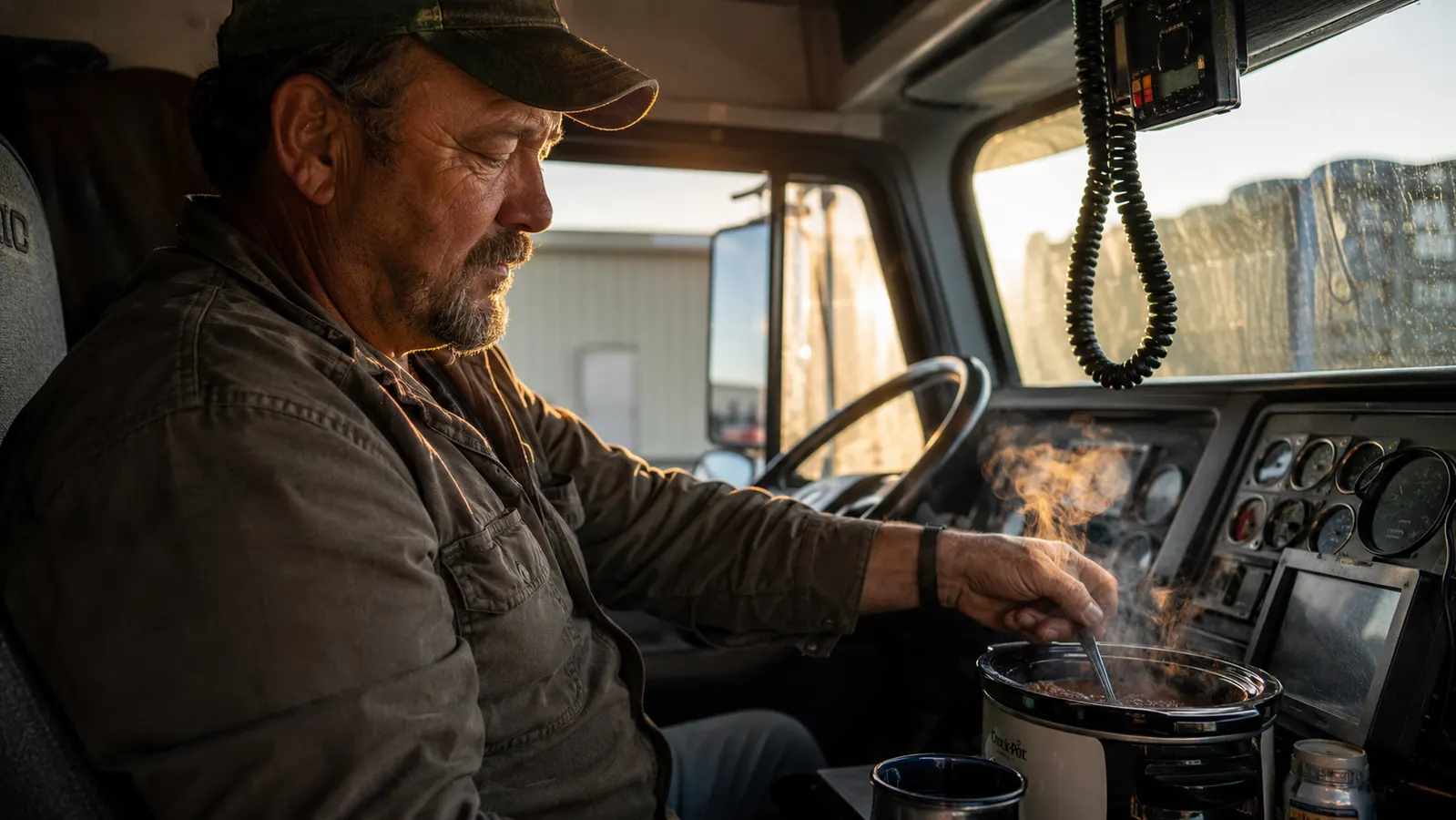
It was a Tuesday night in December, parked at a Flying J outside Laramie, Wyoming. The temperature on my weather radio said minus ten. The other drivers were lined up at the diner counter, hats on, steam coming off their jackets. I was sitting in my bunk eating beef and vegetable chili I had started that morning in Ogden. Didn't cost me a thing extra. Didn't take five seconds of standing in the cold. Just a bowl, a spoon, and a slow cooker that had been plugged into my cigarette lighter since seven a.m.
That night was about two months into what I'd privately decided was my experiment. Three months of not touching a truck stop diner. No Denny's. No Pilot hot bar. No $14 chicken strips that taste like cardboard wrapped in grease. I had bought the RoadPro RPSL-350 12V slow cooker in early October, mostly because my wife Carol got tired of me complaining about what I was eating on the road, and she said she'd pack my groceries Friday nights if I'd actually use a real appliance instead of eating garbage.
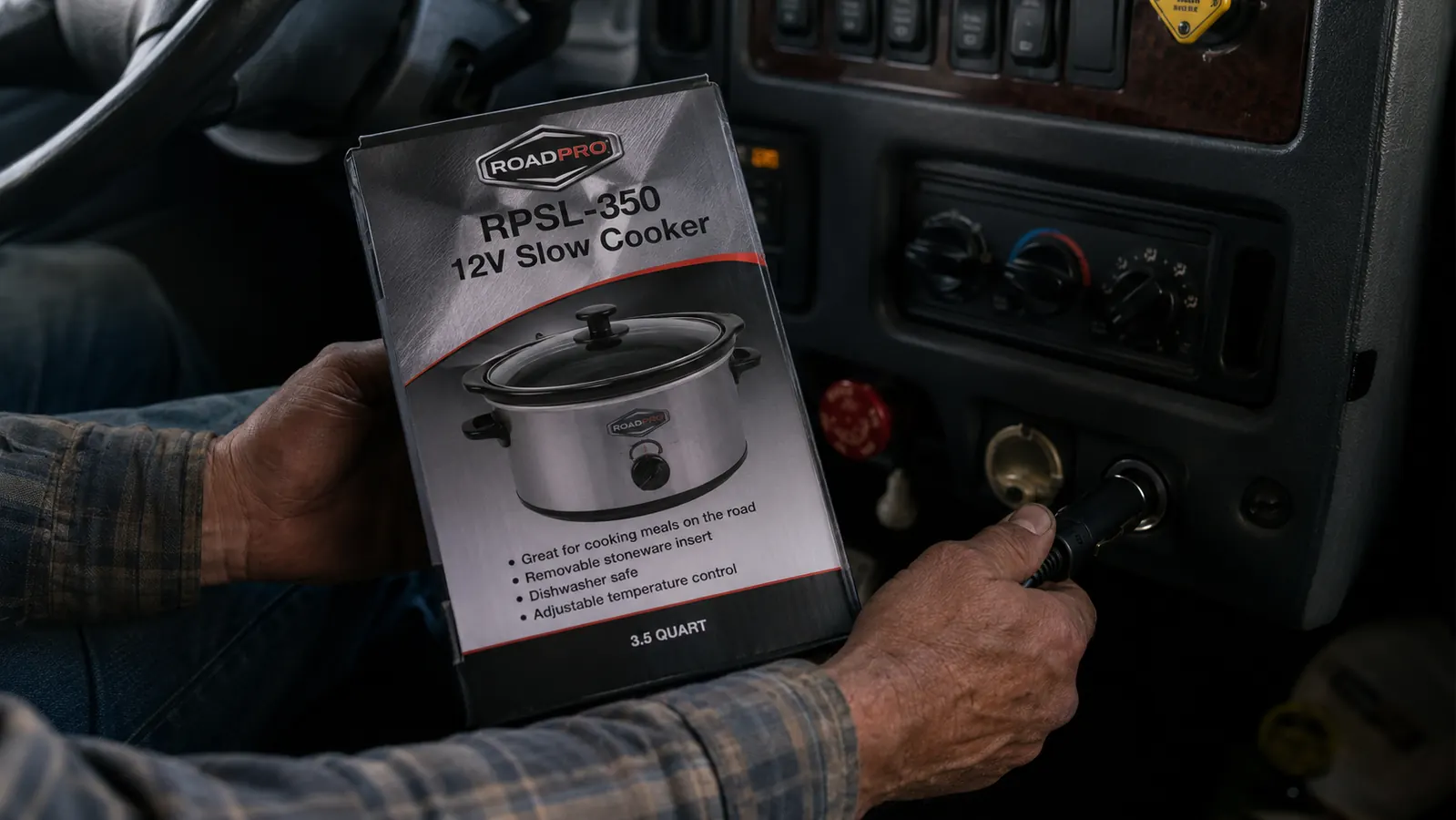
I figured it was worth trying. The cooker runs off a standard 12V outlet, draws about eight amps, and holds 1.5 quarts. That's not a lot of food by home standards, but for one man it's a full meal and usually a little leftover. I started simple: chili, beef stew, chicken soup. Carol would portion everything into zip-lock bags on Sundays, and I'd pull from the cooler as the week went on. Put a bag in the pot in the morning, plug it in, drive eight hours, eat at the end of a run.
It does take longer to heat through than a home slow cooker. At 12 volts you're looking at six to eight hours before something like a thick stew is really done. That sounds like a lot until you realize you're driving anyway. You're not standing in a kitchen watching a pot. You're covering ground, and the food is just coming along for the ride.
Six to eight hours sounds like a long time until you realize you're covering four hundred miles while it cooks. The food is just coming along for the ride.
If truck stop prices are eating your profit, this $32 slow cooker pays for itself in a week.
The RoadPro RPSL-350 plugs into any 12V outlet and holds 1.5 quarts. It is built for truckers, not campers. Check the current price on Amazon before you pay for another $14 diner plate.
Amazon Check Today's Price on Amazon →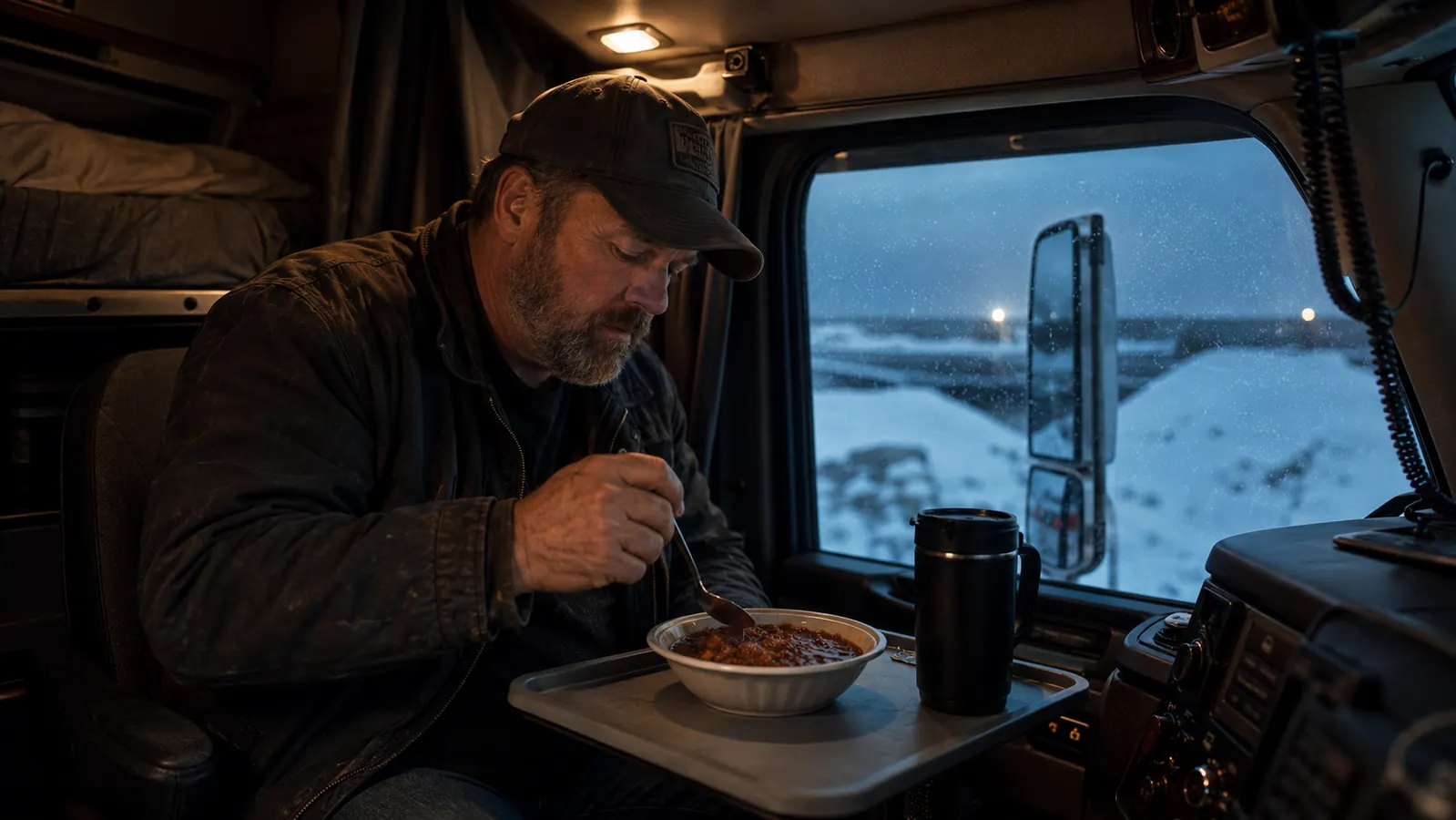
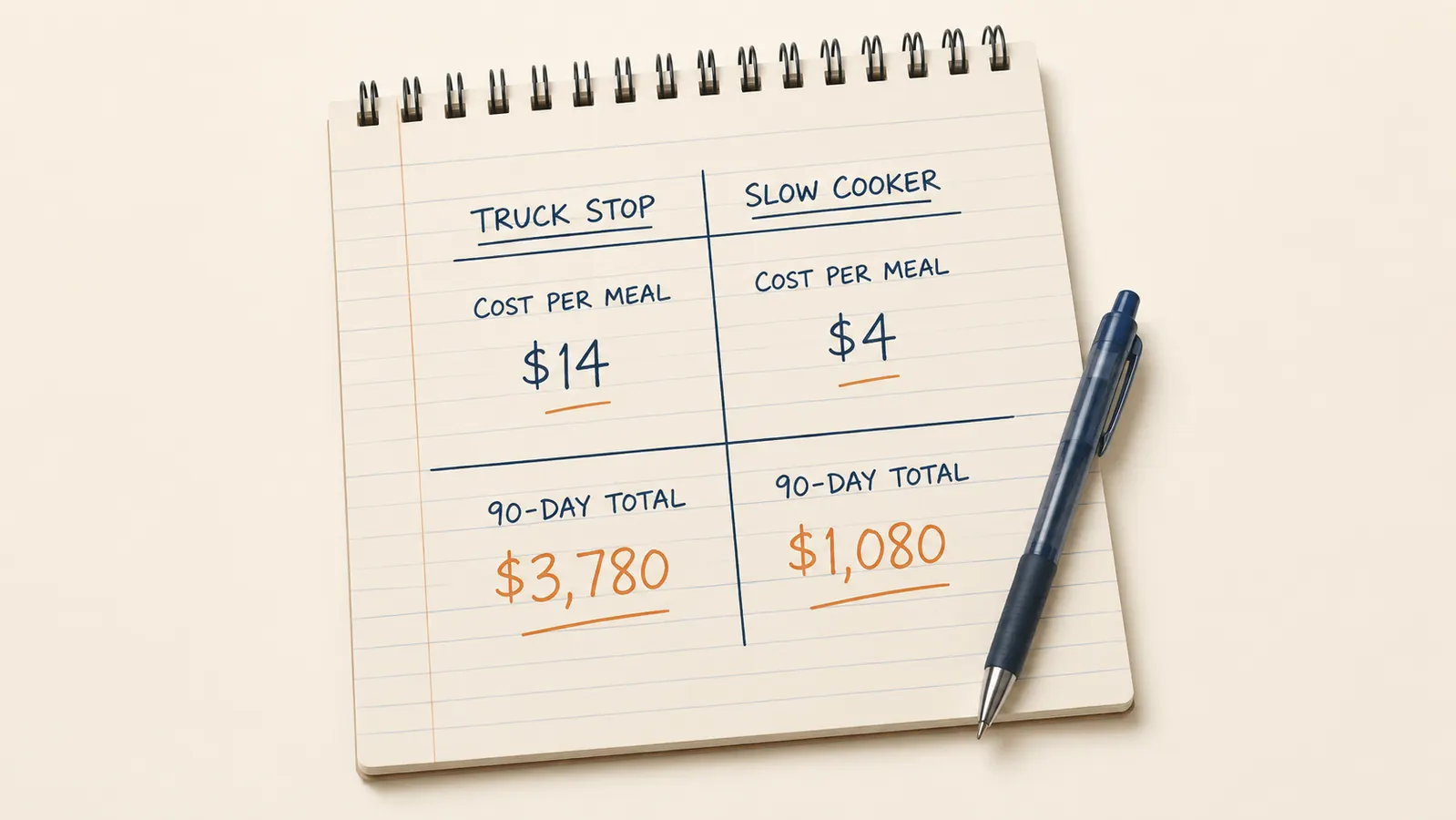
Around week six I sat down and did some rough math. I was spending about four dollars a day on food, maybe five on weeks when I wanted something more than a basic stew. Before the experiment I was probably dropping fourteen to eighteen dollars per sit-down meal, and I was doing that twice a day most days. We're not talking about a couple bucks here and there. In thirty days of real tracking I saved somewhere north of four hundred dollars. Over the full three months of the experiment, I figure it was over a thousand dollars I kept in my pocket instead of giving to a diner.
The best single meal I made in the cab was a pork shoulder with apple cider, onion, and a little brown sugar. Carol put it together Friday night, I pulled it out of the cooler Monday morning on a run through Nevada, plugged it in at six a.m., and by the time I was pulling into the Lathrop TA it was fall-apart tender. I ate half of it for dinner and the rest for lunch the next day. I am not exaggerating when I say it was better than most things I've ordered in a restaurant this year.
There are things the RoadPro can't do. You're not making rice in it reliably. Anything that needs a boil is going to disappoint you because 12V can't get there. Stick to slow-cooked proteins, soups, and stews. Stay away from dairy-heavy stuff because it tends to separate over a long run. And do not overfill the pot if you're going to be on rough pavement. The seal is decent but not perfect, and I learned that on a stretch of I-80 through Nebraska that I would rather forget.
If you want more detail on the full three-month test and how I rated it as a piece of gear, I wrote that up in my long-term RoadPro slow cooker review. If you're trying to decide whether a 12V cooker even makes sense for your route, ten reasons it beats eating at truck stops lays out the case faster.
What I'd Tell You If We Were Sitting at My Kitchen Table
The honest version is this: I am not a cook. I don't enjoy fussing with food. What I wanted was to stop throwing money at diner plates and start eating something that didn't make me feel like I needed a nap before my next run. The RoadPro slow cooker gave me that without requiring me to become someone I'm not. You load it in the morning, you drive, you eat. There's nothing clever about it.
If you are on the fence, the thing costs about thirty-two dollars. That is two and a half truck stop meals. If it saves you even fifty dollars a month in diner bills, it pays for itself in a week. The downside risk is basically nothing. The upside is real food, real savings, and the particular satisfaction of sitting in your bunk at minus ten in Wyoming eating a hot meal while everybody else is waiting for a seat at the counter.
About thirty-two dollars. Less than two truck stop dinners. Try it for a week.
The RoadPro RPSL-350 is what I used for the full three-month experiment. It still works exactly like it did on day one. Check the current price on Amazon and decide for yourself.
Amazon Check Today's Price on Amazon →