
I ate at truck stops for six years before I wised up. Twelve bucks for a burger that tastes like the fryer hasn't been cleaned since the Obama administration. Seven bucks for a cup of chili that's more water than beef. And the worst part: you're on their schedule, not yours. You pull in tired, the line is twenty drivers deep, and you wait thirty minutes to eat something you didn't even want. I started running the RoadPro RPSL-350 12V slow cooker about three years ago and I haven't looked back. It plugs straight into your cigarette lighter, holds 1.5 quarts, and cooks a real meal while you drive. Here are the ten reasons it's the best $32 I've spent on this truck.
This isn't about being fancy. It's about eating real food at a reasonable cost without losing time or wasting idle hours. If you're eating at a truck stop three or four times a week, this cooker pays for itself in three days.
You're spending more at truck stops this week than this cooker costs total.
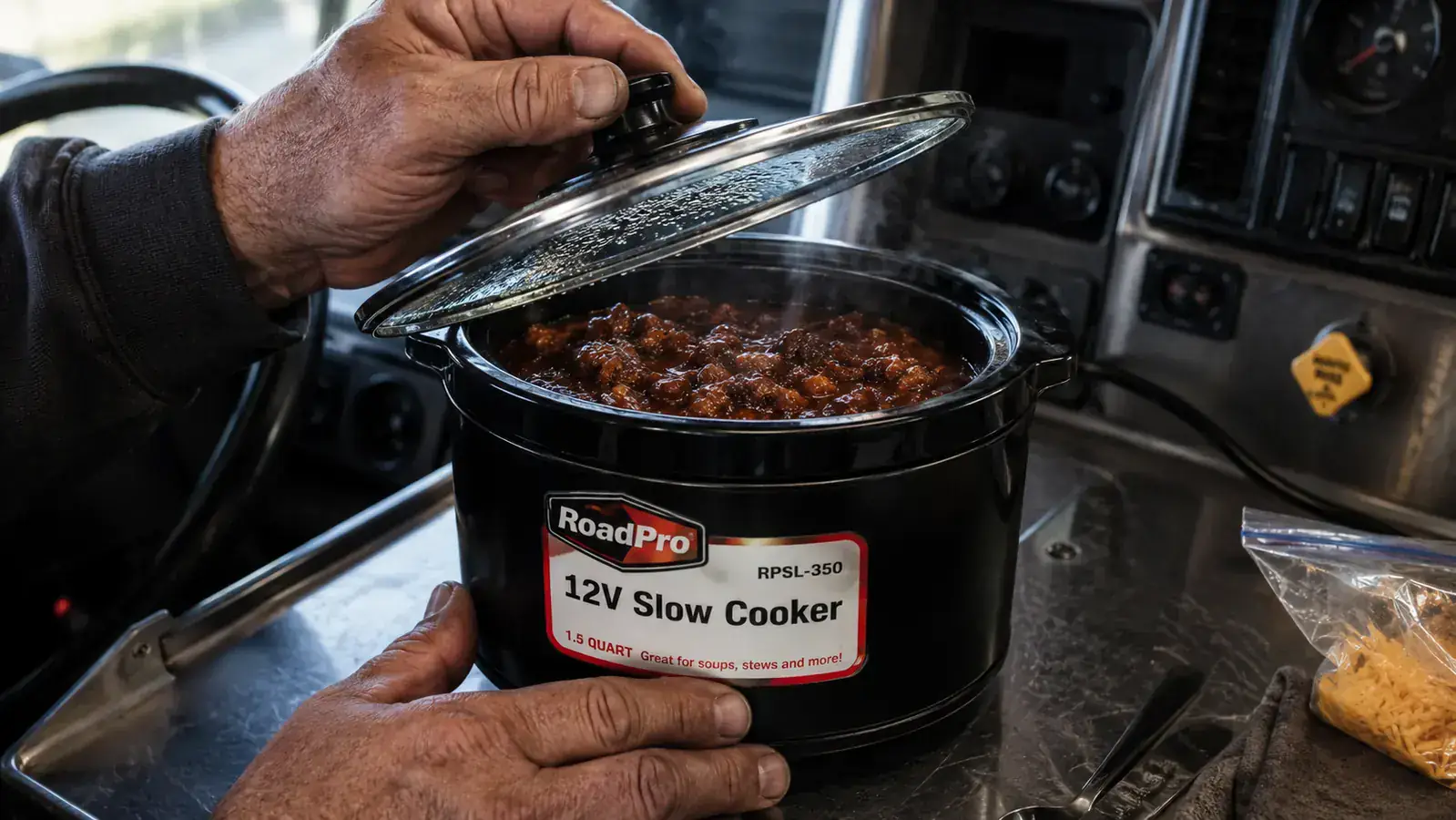
The RoadPro RPSL-350 runs off your 12V cigarette lighter port. No inverter needed. Ships fast to most terminals and truck stops via Amazon.
Amazon Check Today's Price on Amazon →You Save Real Money, Meal After Meal
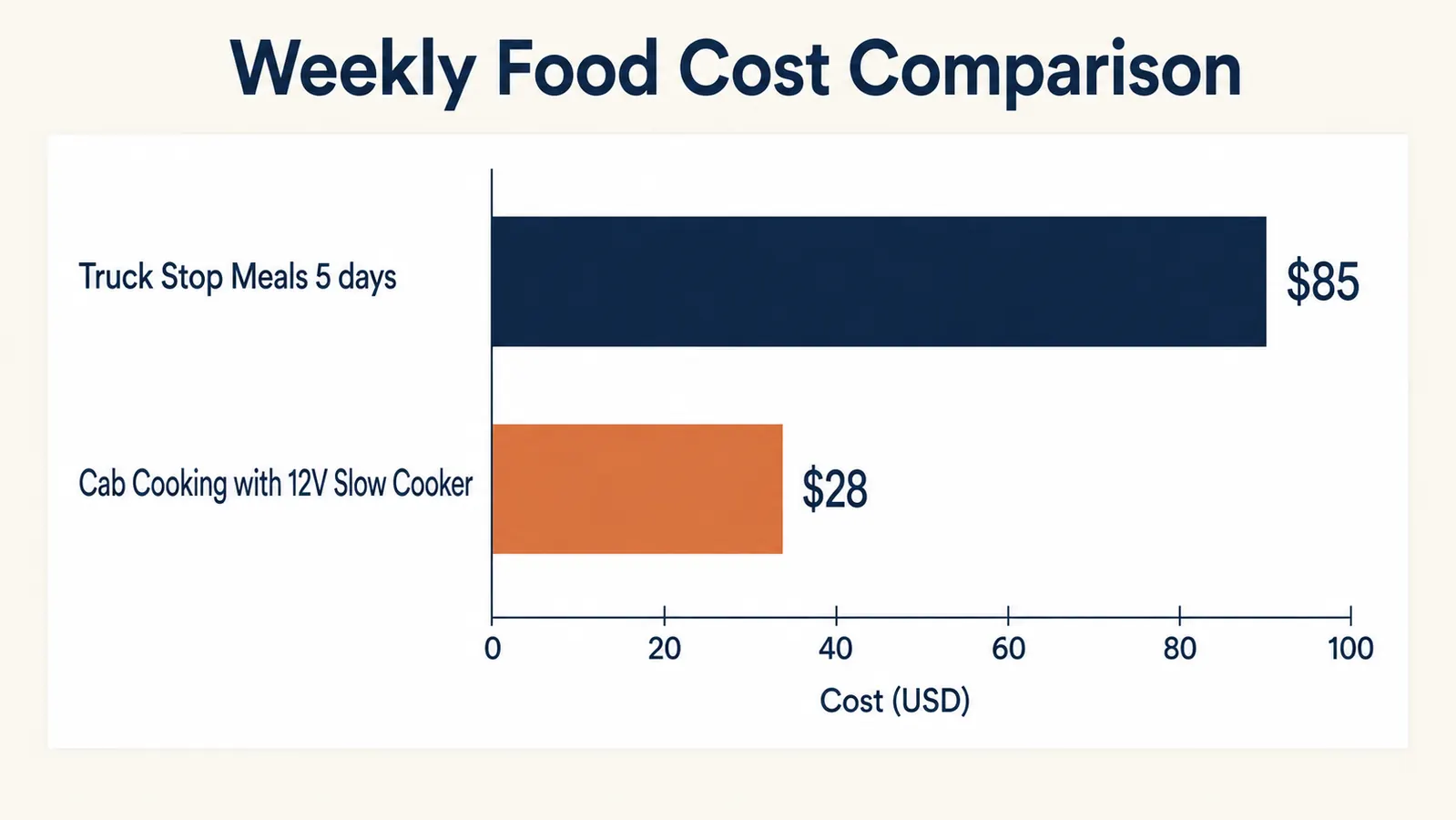
Truck stop food runs $10 to $15 a meal on average, sometimes more if you grab a drink and a snack. A bag of dried beans, a can of diced tomatoes, some sausage, and seasoning costs under $6 and fills that 1.5-quart pot twice. Five days of truck stop eating at $12 a pop is $60. Five days of cab cooking is closer to $18 in groceries. That's a $42 weekly swing. Over a full OTR run, that matters.
No Idle Time Burned While You Wait to Eat
In states with anti-idling laws, every extra minute you're sitting in a truck stop parking lot costs you. Waiting in line, waiting for your order, eating, then getting back to the truck: easily 45 minutes. With the 12V slow cooker, your food cooks while you roll. You pull over, it's ready. No idle time, no APU drain, no waiting. You eat and you're back on the road.
You Control the Sodium
Truck stop food is loaded with salt. That's how it stays shelf-stable and how it tastes like something after sitting in a steam tray for two hours. If you're watching your blood pressure, which a lot of us should be at mile 400 of a long run, cooking in the cab lets you control every ingredient. I use low-sodium chicken broth, skip the salt on beans, and I don't miss the truck stop version at all.
Real Chili in the Cab, Not Watered-Down Truck Stop Chili
The most common thing I cook in the RoadPro is chili. Ground beef, kidney beans, tomatoes, onion powder, chili powder, cumin. I throw it in at the start of a morning run and by early afternoon it's thick and done. Compare that to the cup of chili you get at a truck stop counter: pale, thin, and tastes like it's been sitting there since 6 AM. Once you eat the real thing in your own cab, the truck stop version stops being an option.
You Eat on Your Schedule, Not Theirs
Truck stop kitchens keep hours. Some shut down early, some aren't staffed properly, some have lines that eat twenty minutes of your 30-minute break. With a 12V slow cooker, your meal is ready when you decide it's ready. Running behind on a delivery? The food keeps warm. Want to eat at 4 PM instead of 6? Done. You're not dependent on anybody else's schedule.
No Inverter Required
This is the one that surprises people. The RoadPro RPSL-350 is a true 12V appliance. It does not need an inverter. It plugs directly into your cigarette lighter port and draws power straight from your truck's electrical system while the engine is running. That's a big deal because a decent inverter adds cost and complexity, and a lot of older trucks don't have a good place to put one. Plug in and cook.
Cuts the Drive-Through Habit on Home Runs Too
It's not just for when you're deep OTR. I use mine on shorter regional runs too, days when I'm technically back by evening but still logging 500 miles and eating on the road. Having the cooker keeps me out of drive-throughs on those days. That's another $8 to $10 per meal saved. After a year of regular use, the math gets embarrassing fast when you add it all up.
Better for Weight Management Than Truck Stop Eating
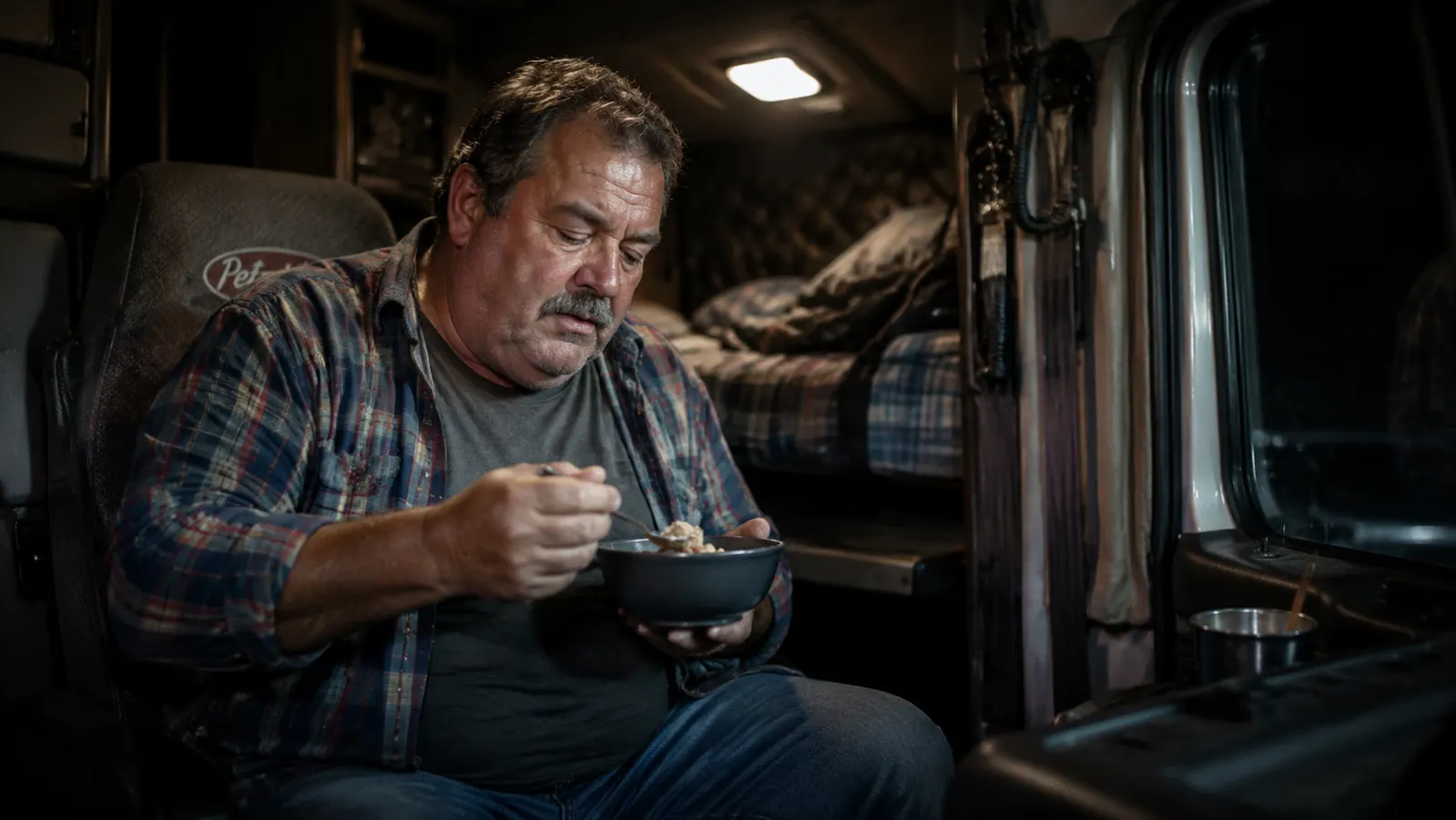
This one's practical, not preachy. Truck stop food is fried, oversalted, and served in portions designed to look like value. When you control what goes in the pot, you control the calories, the fat, and the portion. I'm not saying you need to eat like a sparrow, but swapping a fried chicken basket for a pot of chicken thighs and potatoes cooked in broth will make a difference over a month on the road. A lot of drivers notice it.
Easy to Clean, Small Footprint in the Cab
The 1.5-quart pot is about the size of a large coffee mug. It fits in a small cabinet, on a shelf, or even in a milk crate under the bunk. The inner pot rinses clean with a wet rag and a little dish soap. I do it at a truck stop sink in about two minutes. It doesn't take up counter space you don't have, and it doesn't require dishwasher access you also don't have.
It Keeps Morale Up on Long Runs
This last one sounds soft but it's real. Eating a hot meal you made yourself, in your own cab, while it's 28 degrees and the wind is coming across the Dakotas at 40 miles an hour, does something for your head. You're not standing in a fluorescent-lit truck stop eating something forgettable. You've got a hot pot of something good sitting there waiting. It's a small thing. But after three weeks away from home, small things add up.
What I'd Skip
The RoadPro runs slow compared to a kitchen slow cooker. Plan on six to eight hours for a full cook, not four. Don't expect to throw something in at noon and have it done by 2 PM on an easy setting. Also, it's not a pressure cooker, so tough cuts of meat need a full day's run to get tender. For quick reheating, it works fine. For raw chicken breasts from frozen, give it a full shift. Start with chili or soup your first time. Those are forgiving, they taste good straight from the pot, and they teach you the timing fast.
Five days of truck stop eating at $12 a meal is $60. Five days of cab cooking with the RoadPro is closer to $18. That difference buys a tank of diesel every few weeks.
Three years in and I still recommend it to every driver who asks.
If you're eating at truck stops more than twice a week, the RoadPro RPSL-350 12V slow cooker pays for itself fast. Check current pricing on Amazon before it ticks up.
Amazon Check Today's Price on Amazon →