
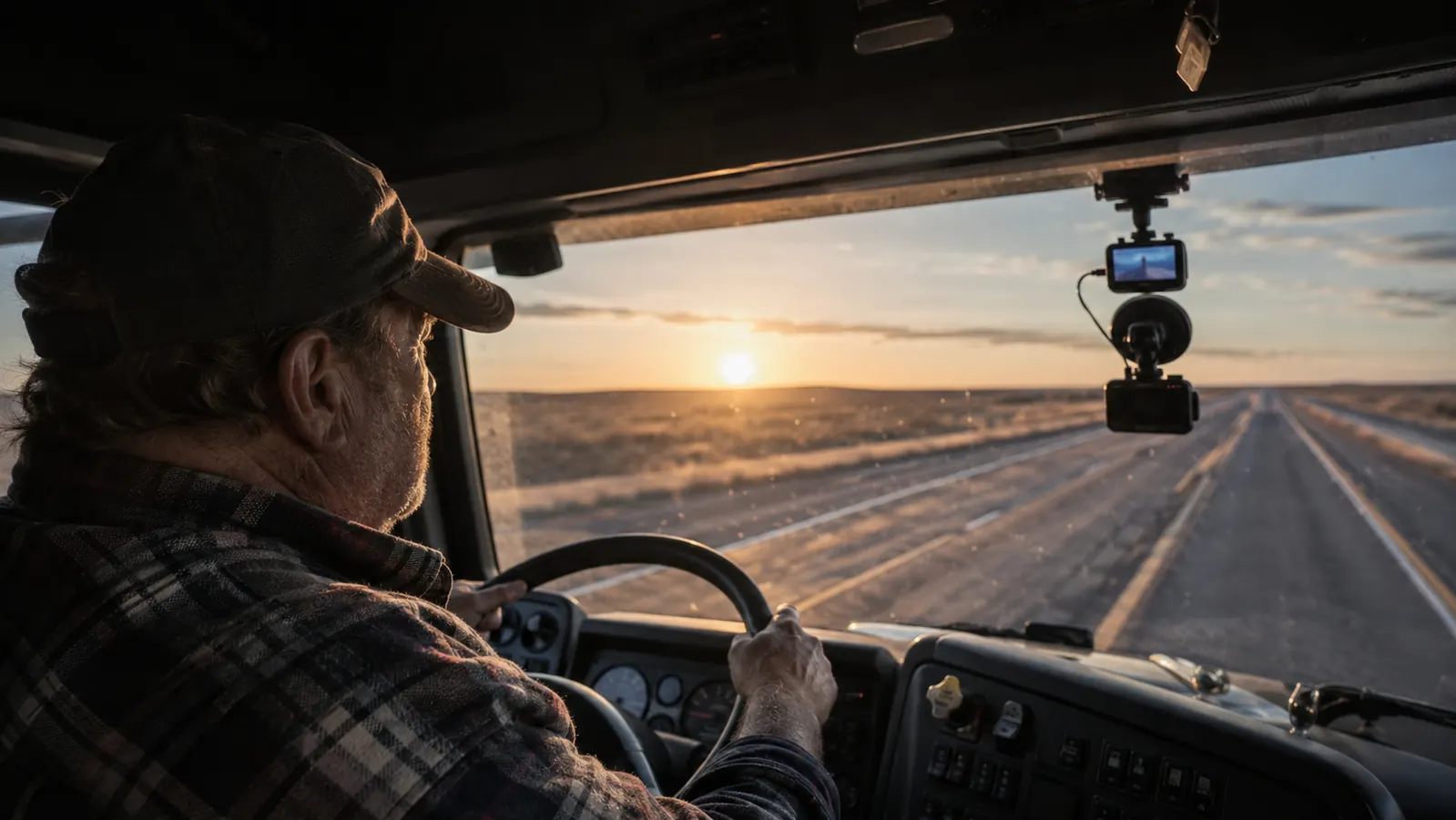
I've been running OTR for going on 27 years. Peterbilt 389, then a Kenworth T680, now a Freightliner Cascadia. In that time I've watched guys lose their CDL over accidents they swore weren't their fault and couldn't prove it. I always told myself I'd get a dash cam eventually. I finally got around to it in September and bolted the ROVE R2-4K to the windshield of my Cascadia. That was eight months and roughly 63,000 miles ago.
I'm not going to tell you this camera is perfect. It's got a couple of things that'd annoy a detail-oriented person. But I will tell you it's already earned its keep twice over, and I'd buy it again tomorrow at the current price if this one stopped working.
The Quick Verdict
Solid 4K front camera with a STARVIS 2 sensor that genuinely works at night, good GPS logging, and parking mode that holds up in a commercial lot. The app takes some patience and you'll want a hardwire kit eventually, but for an owner-operator who needs real liability coverage on the road, this does the job.
Amazon Check Today's Price →Your next dispute could go one of two ways. This camera decides which.
The ROVE R2-4K comes with a free 128GB card included. No extra purchase to get started. Check today's price and availability on Amazon.
Amazon Check Today's Price on Amazon →How I Installed It and Set It Up
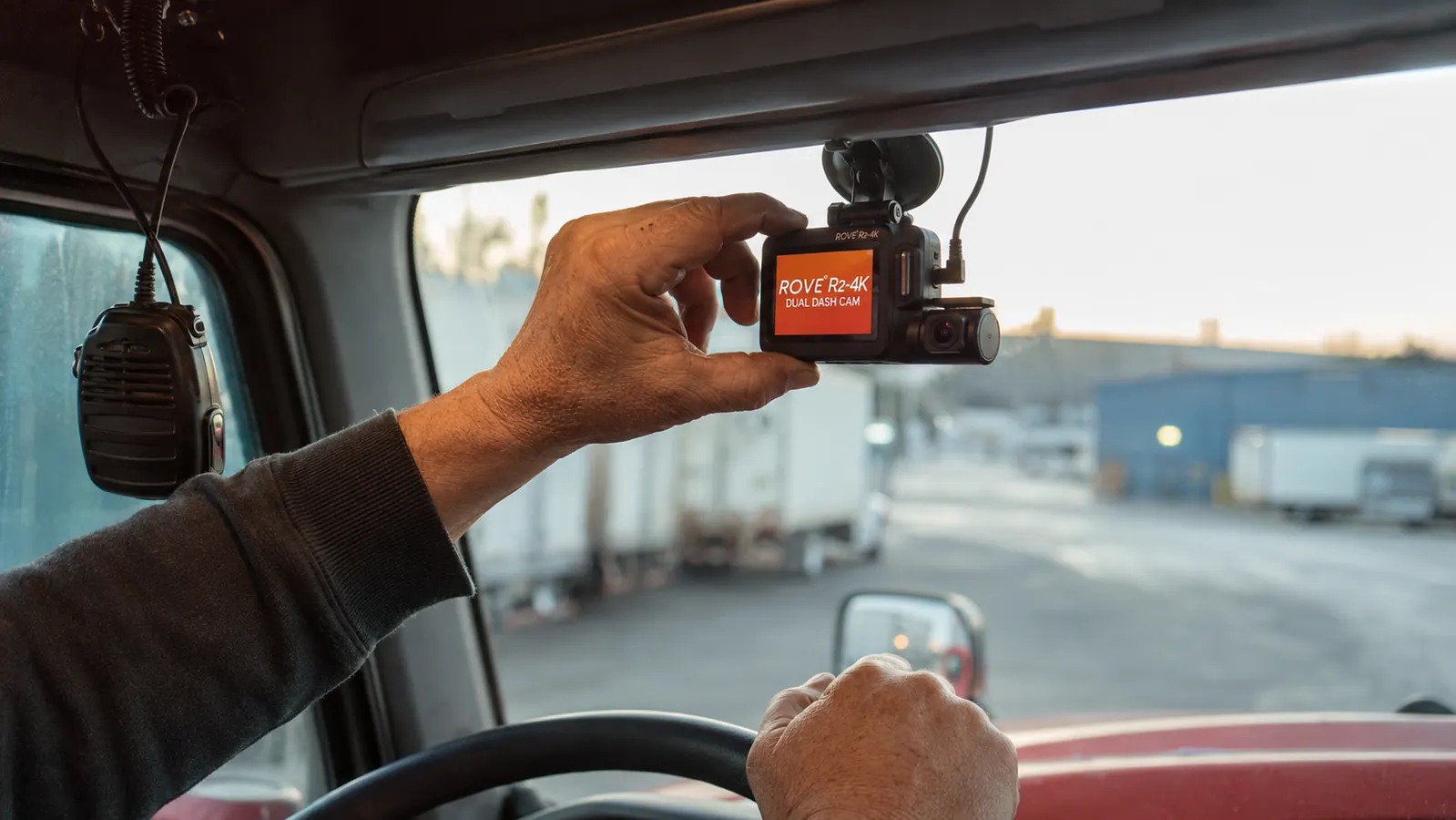
I did the install myself in the lot at a Pilot in Amarillo, took about two hours including running the rear camera cable. I'm comfortable with electrical work from years of doing my own maintenance, but honestly most of this job is just patience with cable routing, not actual skill. The front unit mounts to the windshield via suction cup. I positioned it just behind the rearview mirror so it doesn't eat into my sight lines. On a Class 8 windshield that gives you plenty of real estate.
The rear camera cable runs from the cab back through the rubber boot in the firewall into the sleeper, then out to the fifth wheel area and up to the rear of the trailer. That part is a pain and I'll be honest with you: I used a fish tape and it took three tries to route it clean without pinch points. The camera mounts on the rear cab wall and gives you a view of the trailer and whatever's behind it. If you don't want to deal with the rear cable run, check our guide on how to install a dash cam in a semi truck for the shortcuts I wish I'd known going in.
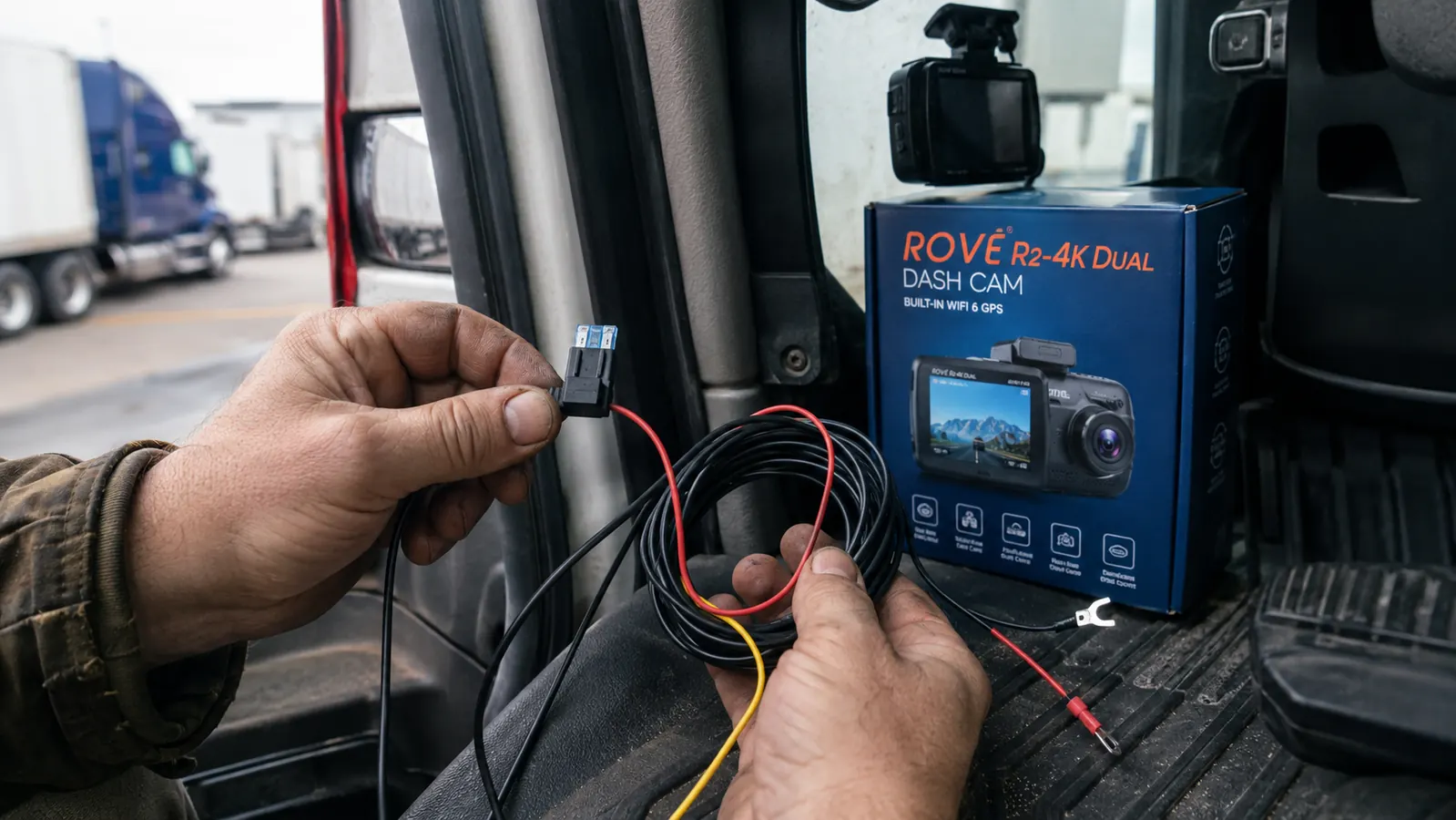
For power I initially used the cigarette lighter adapter. It worked fine, but the cable would dangle and catch on my jacket when I climbed in and out. About six weeks in I wired it directly to an ACC fuse slot using the hardwire kit I ordered separately. That took 45 minutes and fixed the nuisance permanently. The camera goes on with the ignition and off when the key's out, unless you enable parking mode, which I'll get to.
Daytime Image Quality: Better Than I Expected
The front camera shoots 4K at 30 frames per second. On a clear day on I-40 through New Mexico I can make out license plates on vehicles two to three car lengths ahead. That's the number that matters for a dispute. If a four-wheeler cuts me off at 70 and I have to brake hard, I need his plate readable on that footage, not just a blurry white blob. The ROVE delivers that in good light. Colors are natural, not oversaturated, and the wide angle catches the full lane picture without the fish-eye distortion that makes some cheaper cams look like fun-house footage.
The GPS overlay burns speed, location, and timestamp directly into the video file. That's not just a nice-to-have; it's what makes footage defensible. A lawyer or insurance adjuster can't argue that you edited the clip if the GPS track matches the recorded position and speed. I tested this by pulling up the ROVE app and cross-referencing my trip log against what was on the footage. The two matched within a few seconds and a couple hundredths of a mile, which is more than close enough.
Night Vision on the STARVIS 2 Sensor: The Real Selling Point
I run nights a lot. The STARVIS 2 sensor is the main reason I picked this camera over cheaper alternatives that are only decent in daylight. Most budget dash cams shoot garbage after sundown, which is exactly when you need coverage most. Unlit rural highway, no street lights, a deer or a car parked on the shoulder without hazards, that's when the footage has to still be readable.
In practice, the ROVE handles night running better than any sub-$150 camera I've seen. On a dark stretch of I-10 in west Texas I could clearly read plates two cars up in my headlight range. The image goes slightly grainier in real low-light conditions, like overcast rural highway with no headlight help at all, but it stays watchable and identifiable. Compare that to a standard CMOS cam at the same price point, which gives you smeared light blobs. Not a close comparison.
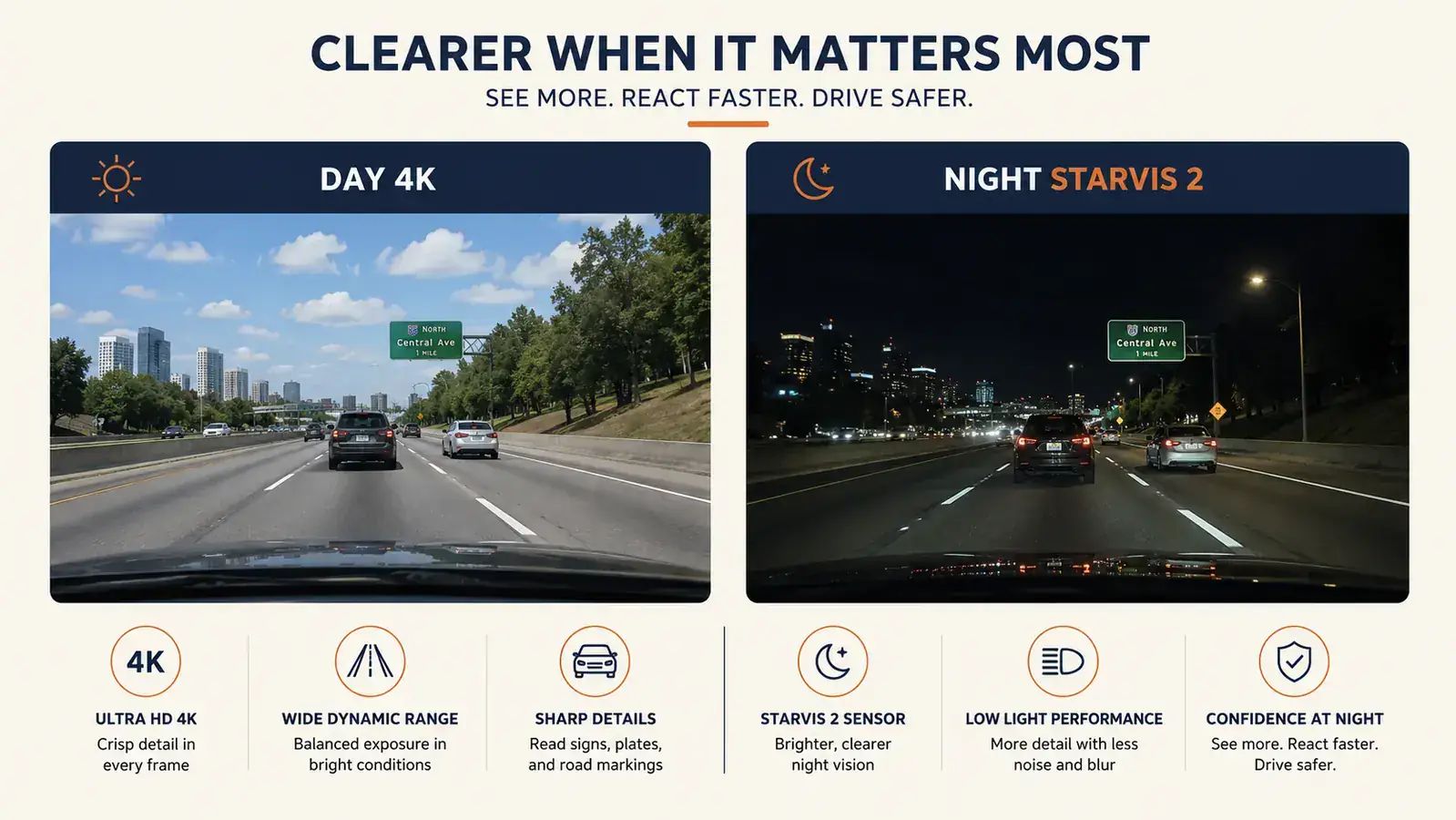
The rear camera drops to 1080p, which is standard for rear units at this price. The rear is more about showing following distance, merge behavior, and what's directly behind you than it is about reading plates at distance. For that job, 1080p is fine. In darker conditions the rear is noticeably softer than the front, but still usable.
The Four-Wheeler Cutoffs This Camera Has Already Caught
I've had four incidents in eight months where a car did something dumb in front of me and I saved the clip manually. None of them turned into insurance claims, but two of them were close enough that I'm glad I had the footage ready.
The first one that really made me appreciate this camera was on I-70 in Kansas in October. A silver SUV merged across two lanes from the left to take an exit, cut directly in front of me, and I had to stand on the brakes. No accident, but I went from 62 to about 40 in a hurry and the trailer shifted. I hit the clip-save button, the camera locked that 90-second window permanently so the loop recording wouldn't write over it, and I had a clean 4K clip of the plate, the driver's behavior, and my speed at the time of braking. Never needed it, but it was there.
Eight months ago I was driving on faith and a clean record. Now I drive with 60,000 miles of proof on a 128GB card.
The second incident that stuck with me was outside of Memphis, I-240, a sedan that merged from an on-ramp directly into my lane without looking. I swerved right and held it, no contact, but if there had been contact that driver would have immediately said I drifted into him. The footage shows exactly the opposite. That clip still sits in a folder on my laptop. Peace of mind has a value I didn't fully appreciate until I had it.
Parking Mode and Lot Security
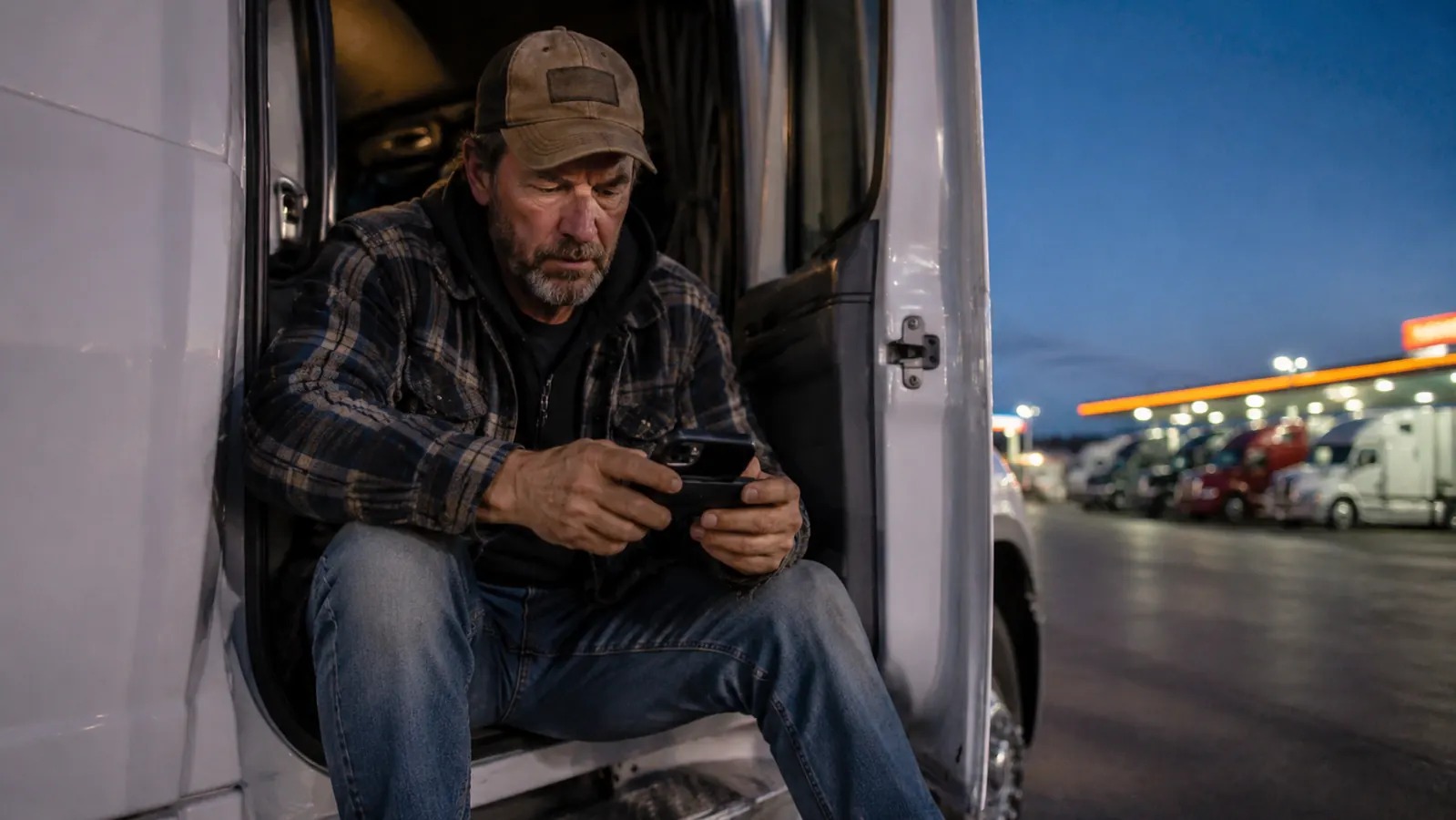
Parking mode on the ROVE activates when the camera detects a voltage drop indicating the truck is shut off. It switches to low-power monitoring and records a clip if the G-sensor detects a bump or the motion detection triggers. This works, but there's a catch: it drains your battery if you're sitting for a long haul. On the cigarette lighter adapter, parking mode will pull from the truck's chassis battery, which is a problem if you're not plugged into shore power at a terminal.
My solution was the hardwire kit. When you wire it direct, you can connect the battery line to a constant-power fuse and the ACC line to an ignition fuse. The camera then cuts parking mode recording when the voltage drops below a set threshold, protecting your starting battery. That's the right way to run this camera if you want parking mode to actually work. It's a bit more setup but it's worth it if you regularly park in open lots. See our breakdown of the full install process at how to install a dash cam in a semi truck for the exact fuse tapping method.
The WiFi App and GPS Software
The ROVE pairs to your phone over 5G WiFi for clip review and settings changes. Setup takes about 10 minutes the first time. The connection is direct camera-to-phone without needing a hotspot or data, which matters when you're parked at a shipper with no signal. Once connected you can pull clips, adjust settings, and view the live feed from either camera.
The app itself works. It is not slick. The interface is functional rather than pretty, and navigating the settings menus takes a little trial and error the first couple of sessions. After two weeks of occasional use I knew my way around it fine. For what I use it for, which is pulling saved clips and checking the GPS log after a run, it does what I need. If you want a polished consumer app experience, look elsewhere. If you want something that works reliably without a subscription, this is fine.
The PC software for reviewing GPS tracks is more capable than the phone app. It shows your full route on a map with the video synced to position. If you need to pull footage for a dispute and show the route, speed, and position together, the PC tool makes that easy. It's available as a free download from ROVE's site.
SD Card Rotation and Long-Term Maintenance
The camera ships with a free 128GB card, which is one of the reasons the value makes sense at this price. 128GB holds roughly 16 hours of continuous 4K footage before the loop starts overwriting the oldest files. For most OTR runs that's more than enough buffer. I've never found myself in a situation where the footage I needed had already been overwritten.
I swap the card out for formatting about every two months. Dash cam cards take a beating from constant write cycles and heat, and a corrupted card is exactly what you don't want when you need that footage. I format in the camera menu, not on the computer, which keeps the file structure intact. I also ordered a backup SanDisk Endurance card, the 256GB, at my three-month mark. The ROVE reads it without issue. If you're serious about coverage, a high-endurance card and a regular format schedule are non-negotiable.
What I Liked
- 4K front camera reads plates in good light at real-world following distances
- STARVIS 2 sensor handles night runs better than anything in this price bracket
- GPS overlay burns speed, location, and timestamp directly into footage for legal defensibility
- Free 128GB card in the box means you're operational the same day
- 5G WiFi clip transfer doesn't require a hotspot or data connection
- Parking mode works correctly when hardwired with proper low-voltage cutoff
Where It Falls Short
- Phone app interface is functional but not intuitive, takes a few sessions to learn
- Parking mode on cigarette lighter adapter risks battery drain over long sits
- Rear camera drops to 1080p and softens noticeably in very low light
- Hardwire kit is a separate purchase if you want clean installation
- Rear cable routing in a Class 8 cab is genuinely tedious without a fish tape
How This Compares to Other Dash Cams I Looked At
Before I bought the ROVE I looked at the Vantrue E1 Lite and a couple of no-name units on Amazon. The Vantrue is a solid camera and worth considering if you want to compare spec sheets head-to-head. I put together a full breakdown at ROVE R2-4K vs Vantrue dash cam for truckers if you want to see how they stack up on night vision, parking mode, and what happens when you actually need the footage.
The no-name units I looked at were cheaper by 30 to 40 dollars. I passed on all of them. At this price point the sensor quality gap between a STARVIS 2 and a generic CMOS is real, not just a spec-sheet number. I've seen footage from the budget cams at night and it's not what you want to hand to an insurance adjuster.
Who This Is For
Owner-operators who drive their own equipment and carry liability on every mile. Company drivers who want personal coverage separate from whatever the carrier has or doesn't have. Anyone who runs nights regularly or drives high-traffic corridors where four-wheelers do dumb things around big trucks on a daily basis. If you've ever been in a dispute where it was your word against theirs, you already know the value of having the footage. This camera gives you that coverage without requiring you to spend $300 on a professional-grade unit.
Who Should Skip It
Drivers who run dedicated routes with company-issued cameras already installed on their trucks. Lease drivers whose carrier equipment contracts don't allow aftermarket cameras on the glass. And anyone who wants a polished, plug-and-play setup with zero learning curve. The app and the rear cable install both require some patience. If you're not the type to read the manual and figure it out, pay someone to do the install, or look at a camera with better out-of-the-box software. The hardware is worth it, but you have to be willing to spend a Sunday afternoon getting it right.
Eight months in, I'd buy this camera again without hesitating.
The ROVE R2-4K includes a free 128GB card, front 4K with STARVIS 2 night vision, GPS logging, and parking mode. Check today's price on Amazon before you drive another load without coverage.
Amazon Check Today's Price on Amazon →