
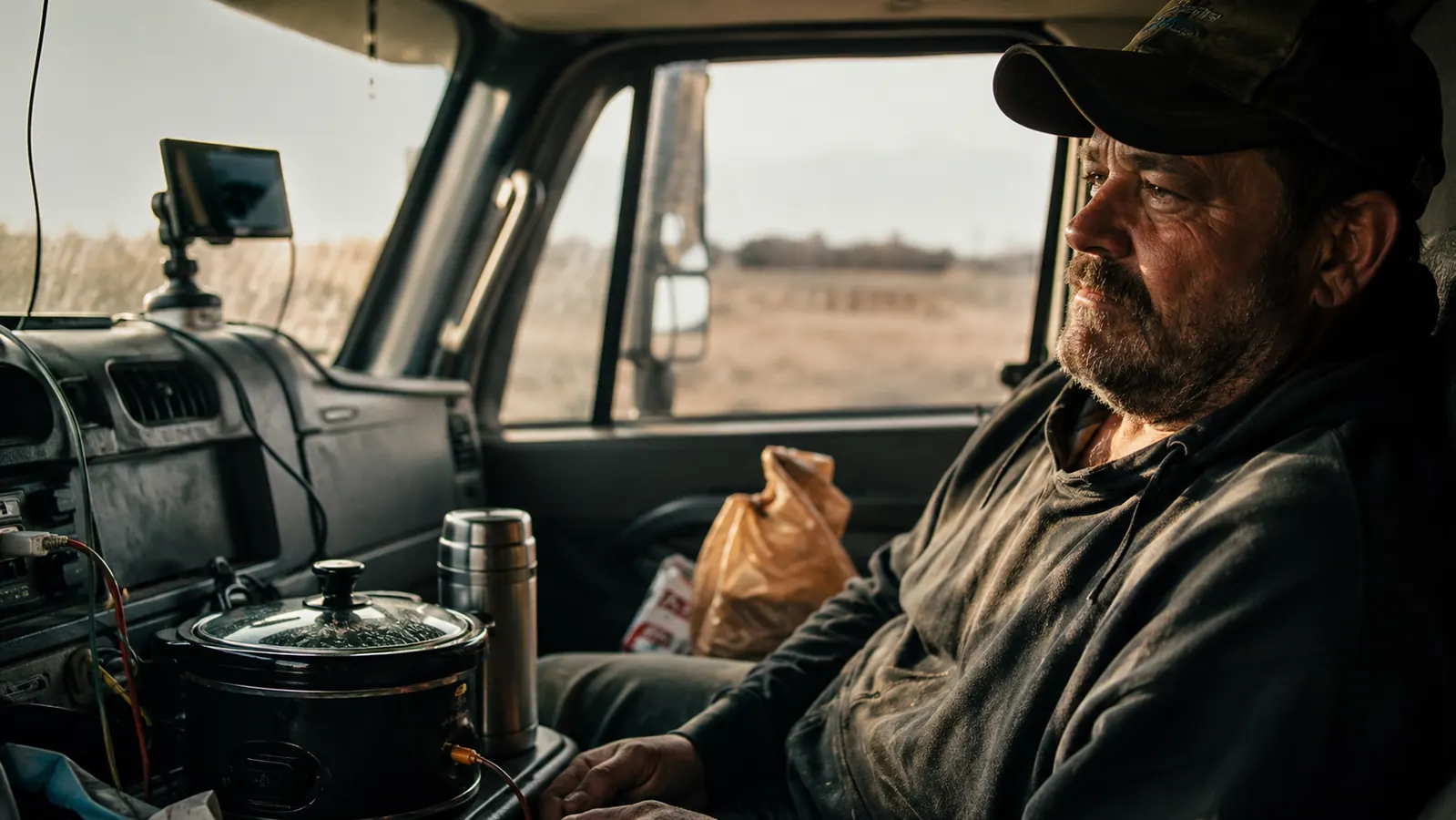
I've eaten enough truck stop burritos to last three lifetimes. Gas station sushi at 2 AM because you missed the hot case cutoff. Coffee and a bag of peanuts because that was the fastest thing at the Flying J and you had a pickup at 0600. If you're OTR, you know the routine. And you also know the routine is quietly wrecking your health and burning money you could keep.
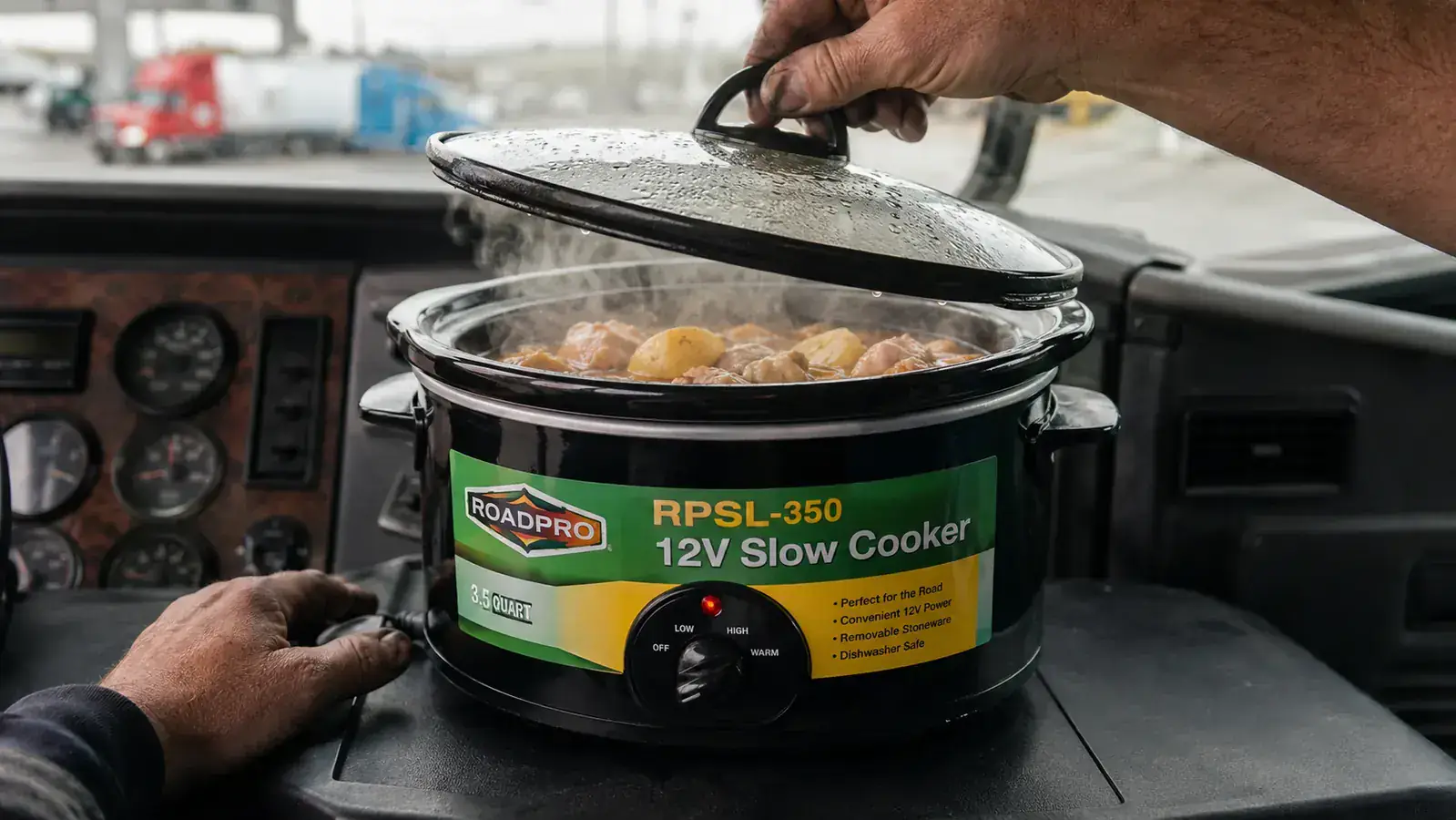
I picked up the RoadPro RPSL-350 12V slow cooker after a buddy of mine on the same lane kept talking about it. He swore by it. What he did not tell me was the stuff that would have actually helped me set expectations before I bought it. That's what this review is. Not whether it works, it does, but the real details that the Amazon listing glosses over and the five-star reviews skip entirely.
The Quick Verdict
It genuinely cooks real food in a truck cab, but only if your truck's electrical is healthy and you plan meals around a 4-6 hour window. Know the limits going in and it earns its place in the cab.
Amazon Check Today's Price →Still eating truck stop food three times a day? That's fixable for about $32.
The RoadPro RPSL-350 plugs into your cigarette lighter and slow-cooks real meals while you drive. Chicken, stew, soup, chili, actual food, not a gas station hot dog.
Amazon Check Today's Price on Amazon →How I've Been Using It
I run a 2017 Peterbilt 579 on a Midwest-to-Southeast lane, usually two to three runs a week, roughly 2,400 miles round trip. I've had the RoadPro in the cab for about four months now. I plug it in through the cigarette lighter on the passenger side, set it on the floor behind my seat when I'm moving, and on the bunk fold-down shelf when I'm parked.
My wife packs ingredients on Fridays before I leave. We settled on a system: gallon zip-lock bags pre-loaded with one meal's worth of chicken thighs, potatoes or sweet potatoes, carrots, and seasoning. I drop the bag contents into the pot Monday morning and by the time I'm pulling into a shipper four or five hours later, I've got a hot meal waiting. That system works. But it took me two weeks of trial and error to land on it.
The Voltage Drop Problem Nobody Warns You About
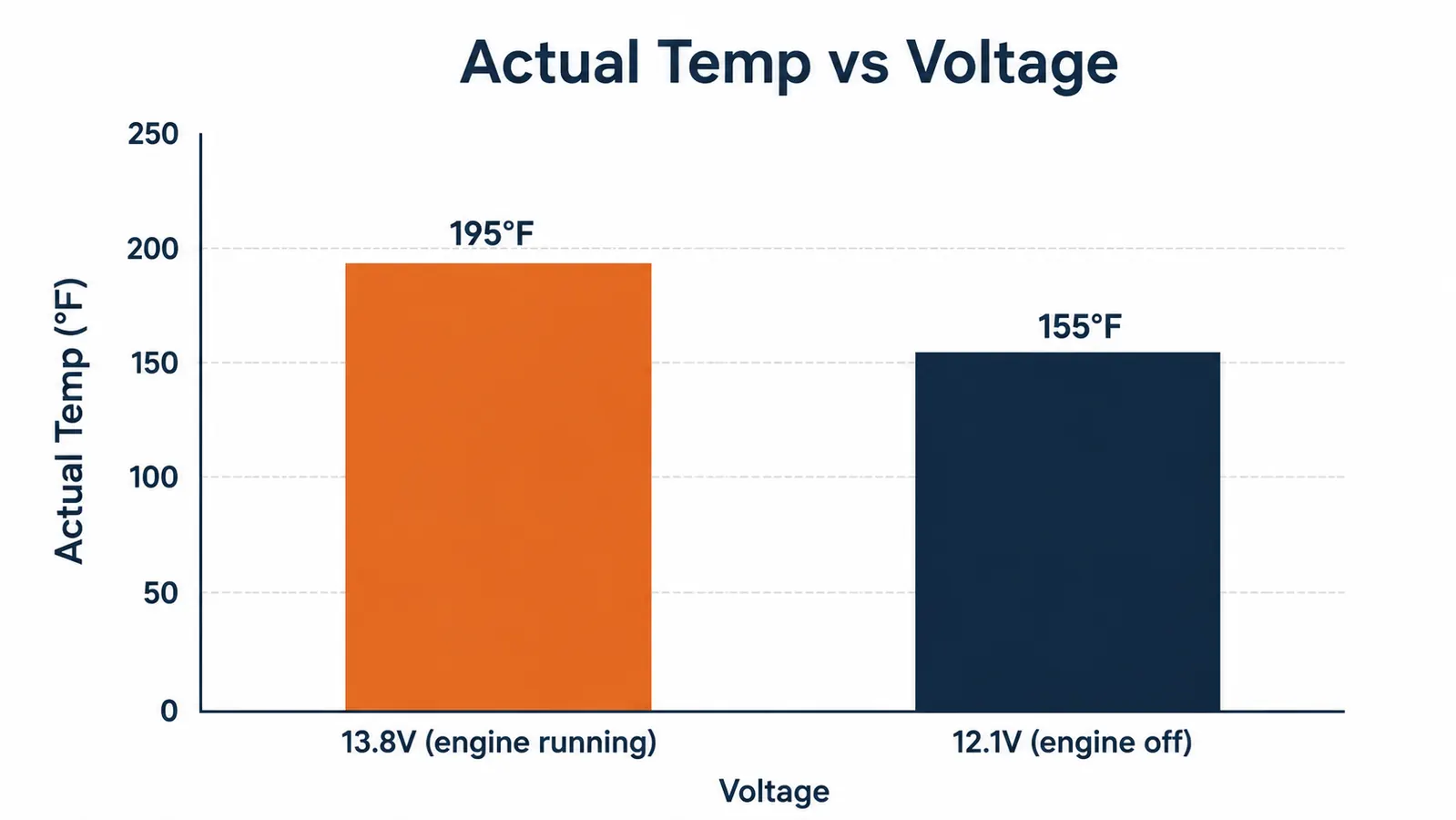
Here is the thing the Amazon listing will not tell you: the RoadPro RPSL-350 draws 12 volts and about 6 amps. At that draw, the actual interior temperature you reach depends entirely on what your truck's electrical system is putting out. With the engine running and the alternator charging, you're typically seeing 13.6 to 14.2 volts at the outlet. The pot gets up to about 190 to 200 degrees Fahrenheit under those conditions. That's enough to safely cook chicken, soften root vegetables, and get a broth going.
But here's where older trucks run into trouble. If you're running a high-mileage rig with a tired alternator, or if you're parked with the engine off running on batteries, that outlet voltage drops toward 12.0 to 12.4 volts. At that point the pot might only reach 150 to 160 degrees. That is not enough to cook raw chicken to a safe temperature. You will get lukewarm protein soup that you should not eat. I learned this because I tried to cook on a parking lot overnight run with the engine off. The food was warm but not done. I tossed it.
The fix is simple: run the cooker with the engine on. Which is fine for most people since you're moving anyway. But if you park overnight and want hot food waiting when you wake up, either keep the truck idling where legal, or have a separate 12V source with enough capacity to maintain real voltage for four-plus hours. Don't assume the batteries alone will cut it.
What It Cooks and What It Won't
The top temperature ceiling under good conditions is around 195 to 200 degrees. For reference, a home crockpot on high runs at 212 to 300 degrees depending on the unit. That gap matters. It means the RoadPro cooks more slowly than you'd expect from slow cooker experience at home, and it means certain things just don't work.
What works well: boneless skinless chicken thighs, pork loin pieces, canned soups doctored with fresh vegetables, bean soups with pre-soaked beans, lentil stews, oatmeal on overnight runs, rice if you use a proper ratio and have four-plus hours. Sweet potatoes and carrots go soft and good in about four hours. Hard root vegetables like beets need a full six hours. Pasta is risky, it goes mushy if you're not precise, so I skip it.
What does not work: anything that needs a true boil, anything that needs to brown before cooking (sear your meat at home and freeze it if you want that texture), most ground beef dishes unless it's already pre-cooked, and anything with a lot of dairy that can't handle low-and-slow temps without separating. It is a slow cooker, not a stovetop. If you approach it that way from the start, it delivers.
I thought about returning it after week one. The third week I made chicken and sweet potatoes at 70 mph outside of Memphis and ate better than I had in four years on the road.
The Lid Seal Is Not Optional
The pot has a clamping lid with a rubber gasket. That seal is not just for keeping heat in, it is what keeps your food in the pot on rough road. If you leave that clamp loose and hit a frost heave on I-80 in February, you will find out what chicken broth smells like when it soaks into your floormat. I found this out. It was not a good morning.
Check the clamp every time you move the pot. The good news: the clamp mechanism is solid and shows no sign of wearing out after four months of daily use. The rubber gasket is in good shape too. Just make the habit of latching it before you put the truck in gear.
Also worth mentioning: set it on the floor behind the seat, not on the seat itself. The cooker is heavy enough when full that a hard stop sends it sliding on vinyl. Floor placement with the cord routed up along the door panel keeps it stable and keeps the cord out of your feet.
Batch Sizes That Actually Fit
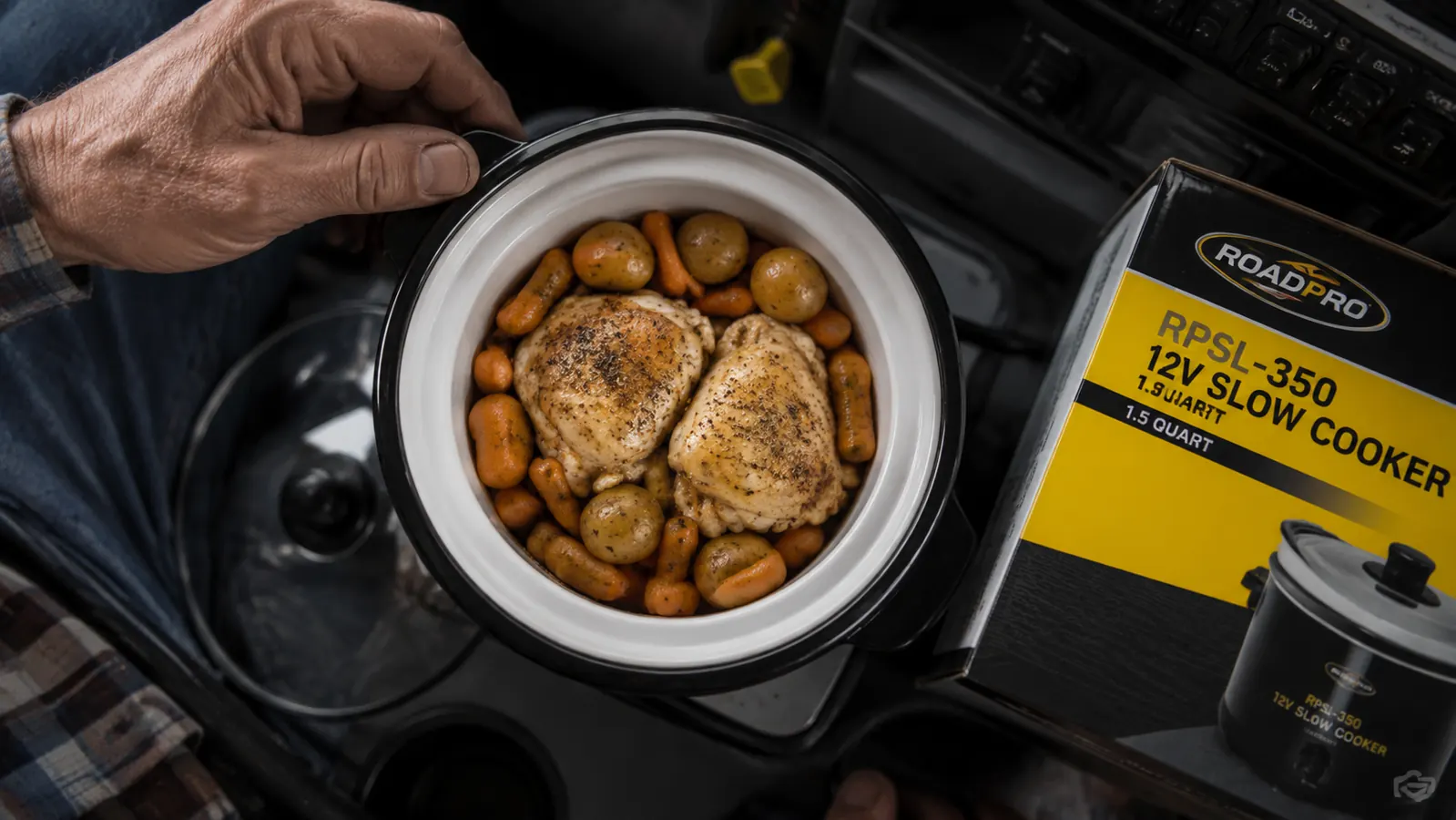
The pot is 1.5 quarts. That sounds small and it is small. Here is what actually fits and still cooks properly. Two large boneless chicken thighs plus two medium potatoes and two carrots just barely fit with a cup of liquid. That feeds one person a solid meal. One pork loin cut into four pieces, a sweet potato, and a can of low-sodium chicken broth fills it just about right.
Do not try to overfill it. If the food is touching the lid seal, it will not seal properly and it will not reach temperature correctly either. Leave an inch of clearance at the top. I tested a two-person portion because I had a rider one week. It was overfull and took over six hours to get to temperature, and the center of the chicken was barely 160 degrees when I pulled it. Not a risk worth taking.
For solo drivers, the 1.5-quart size is exactly right. It's one decent meal per cook, which is what you want. You're not trying to meal prep a week in a pot that fits in a truck cab, you're trying to eat better than a gas station hot dog today, and this pot does that.
Cleanup in a Truck Stop Bathroom
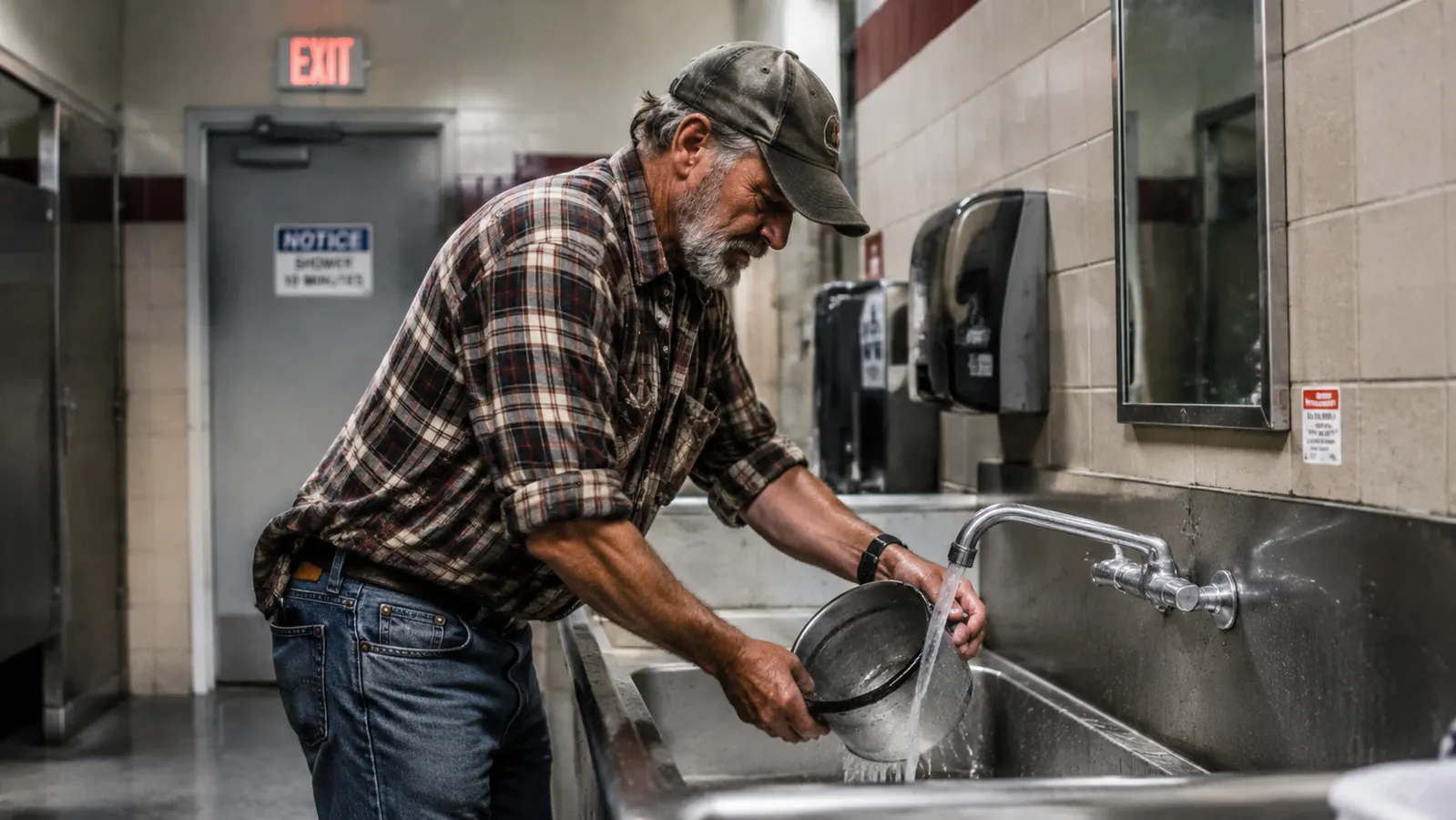
This is the practical thing nobody talks about in the reviews. The inner pot is stainless steel and it lifts out. That matters a lot. You take the inner pot out, dump the leftovers, and wash it under the sink. The outer housing stays in the cab. You do not need a kitchen. A truck stop sink, a little dish soap, and a paper towel handles it in under two minutes.
Chicken and pork do leave some film on the pot after a few uses. A small bottle of dish soap in your cab bag and a folded dishcloth will handle it. I carry one of those pocket-sized hotel soaps specifically for the pot. Takes up no space. I wash it in the Flying J shower room or at the sink between the showers and the main area where there's more room.
What you do not want to cook is anything sugary that can caramelize onto the steel, things like sweet BBQ sauces or glazed carrots with honey. Those require actual soaking and scrubbing. Stick to savory broth-based meals and cleanup stays quick.
What I Liked
- Cooks real food, chicken, pork, root vegetables, lentil stew, at highway speeds
- Lid clamp and rubber gasket keep contents sealed on rough road when properly latched
- Stainless inner pot lifts out for quick cleanup in any truck stop sink
- Runs off the cigarette lighter with no inverter needed
- Small enough to tuck behind the driver seat or on a bunk shelf
- Cord length is generous, reaches the outlet without straining
Where It Falls Short
- Voltage-dependent: won't safely cook raw chicken if your electrical is weak or you're on batteries only
- Temperature ceiling of ~195F means longer cook times than a home crockpot, budget 4-6 hours
- 1.5-quart size is right for one person; can't do two portions without risking uneven cooking
- Overfilling breaks the lid seal, you have to discipline yourself on portion size
- Pot slides on vinyl seats; floor placement is a must while moving
- Sugary glazes and BBQ sauces are a cleanup nightmare, stick to broth-based meals
Who This Is For
This cooker is built for a solo OTR driver running a modern or recent-model truck with a healthy electrical system, who's willing to spend 10 minutes on Sunday packing ingredients and another 2 minutes on cleanup. If that's you, this thing is one of the better quality-of-life purchases you'll make in the cab. Hot food made from real ingredients that you actually chose, ready when you pull into a rest area. That is genuinely worth something after a long stretch.
It also works well for drivers who already pack a small cooler. The combination of a 12V cooler for cold storage and this slow cooker for hot meals gets you close to real home cooking on the road. Plenty of drivers run exactly that setup.
Who Should Skip It
If your truck is older and the alternator has seen better days, test your outlet voltage before relying on this for protein-based cooking. A cheap multimeter costs almost nothing and could save you a food poisoning situation. Voltage at the outlet should be 13.4 or higher with the engine running to get reliable results with raw meat.
If you're team driving and need to cook for two people, the 1.5-quart size is going to frustrate you. You'd need to run two consecutive batches or look at a larger 12V option. And if you travel with a partner or co-driver who needs their own hot meal on a different schedule, a HotLogic lunch box that reheats individual portions is a simpler setup. Different tool for a different job.
Your electrical is healthy, you run solo, and you're tired of truck stop food. This cooker belongs in your cab.
The RoadPro RPSL-350 runs about the same as a week's worth of truck stop lunches. After that it pays for itself every time you skip the gas station hot case.
Amazon Check Today's Price on Amazon →