
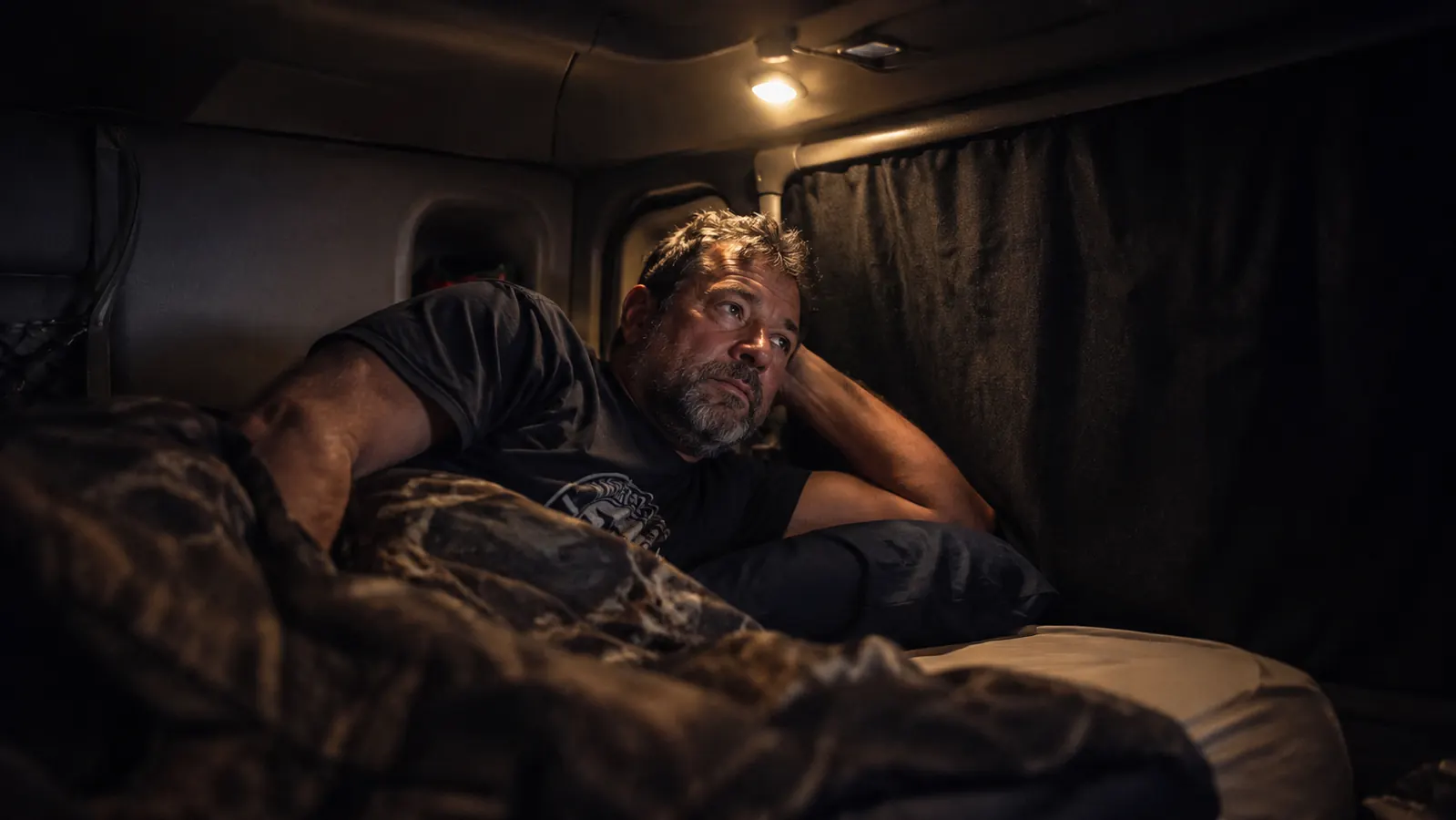
I run a 2021 Freightliner Cascadia out of Columbus and I do mostly nights on the Midwest to Southeast corridor. That means I sleep days. Flying J lots at ten in the morning, TA rest areas with the sun coming full over the cab roof by seven, and occasionally a shipper dock where the floodlights never go off. I went six months trying to sleep in that situation with nothing more than a cheap set of curtains I bought at a Walmart in Louisville. Woke up groggy every cycle. My buddy Carl talked me into picking up the NICETOWN blackout bunk panels. Carl's been running nights for sixteen years. I figured he'd earned the right to give me advice I'd actually take.
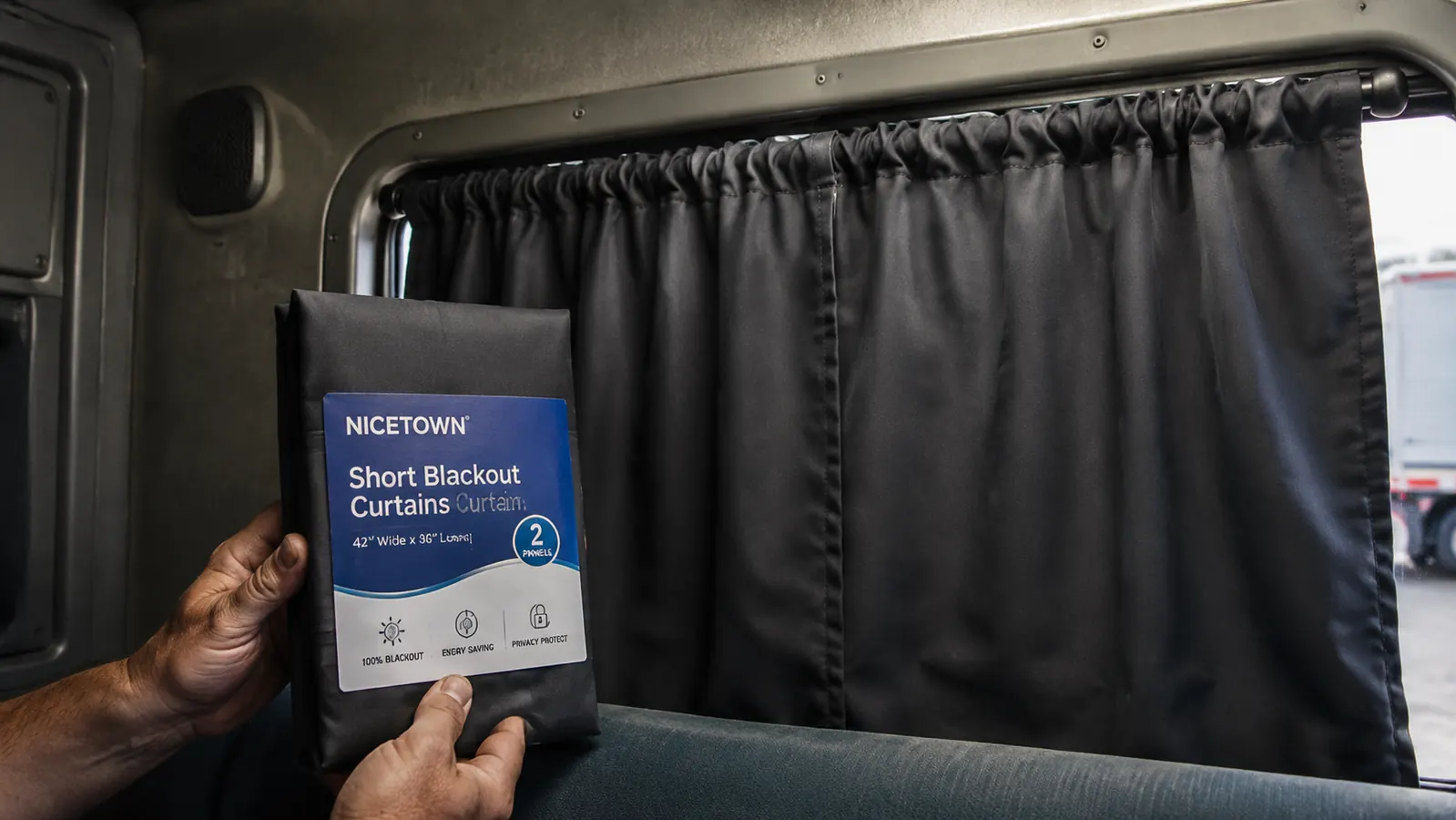
I've now had the NICETOWN Short Blackout Curtains, ASIN B0CQNMG5JP, hanging in my sleeper for six months. I've run them through summer sun in Georgia, parking lot floods in Memphis, a full wash cycle after a diesel spill in the bunk area, and a rough stretch of I-65 that rattles everything not bolted down. This is what I found.
The Quick Verdict
They block most of the light most of the time, they stay on the rod through highway vibration, and at this price point nothing else I've found comes close for a sleeper cab.
Amazon Check Today's Price →If daytime sun is wrecking your sleep cycle, these panels fix that for about the price of a truck stop meal.
NICETOWN's blackout bunk panels have over 46,000 ratings. Stuart's been running them six months in a Freightliner Cascadia. Check today's price on Amazon and see if your window size is in stock.
Amazon Check Today's Price on Amazon →How I've Used Them for Six Months
Setup took about twenty minutes the first time. I used a spring tension rod rather than the Velcro option. My reasoning: I didn't want adhesive on the window frame because I'm leasing the truck and I didn't want a conversation with my carrier about adhesive residue. The tension rod friction-fits inside the window recess on the sleeper. Most sleeper windows on a Cascadia have a shallow interior frame about an inch deep. The tension rod sits in that, and the panels hang from the grommets. The fit isn't factory-tight but it's close.
The panels themselves are about 52 inches wide and come in various lengths. I ordered the 45-inch length, which covers my sleeper side windows with a couple inches of overlap on the bottom. Sleeper windows on most modern Class 8 trucks are not standard residential sizes. Measure your window before you order and account for the fact that you want the panel wider than the window opening, not equal to it, or you'll get light coming in around the edges.
I sleep on my bunk from roughly 9 AM to 4 PM on most runs. On that schedule, I'm dealing with morning sun through the passenger side glass and afternoon sun from the driver side depending on which direction I'm parked. The panels handle both. Not perfectly, but well enough that I stopped waking up with a headache.
Light Blocking: What Actually Happens at a Bright Truck Stop
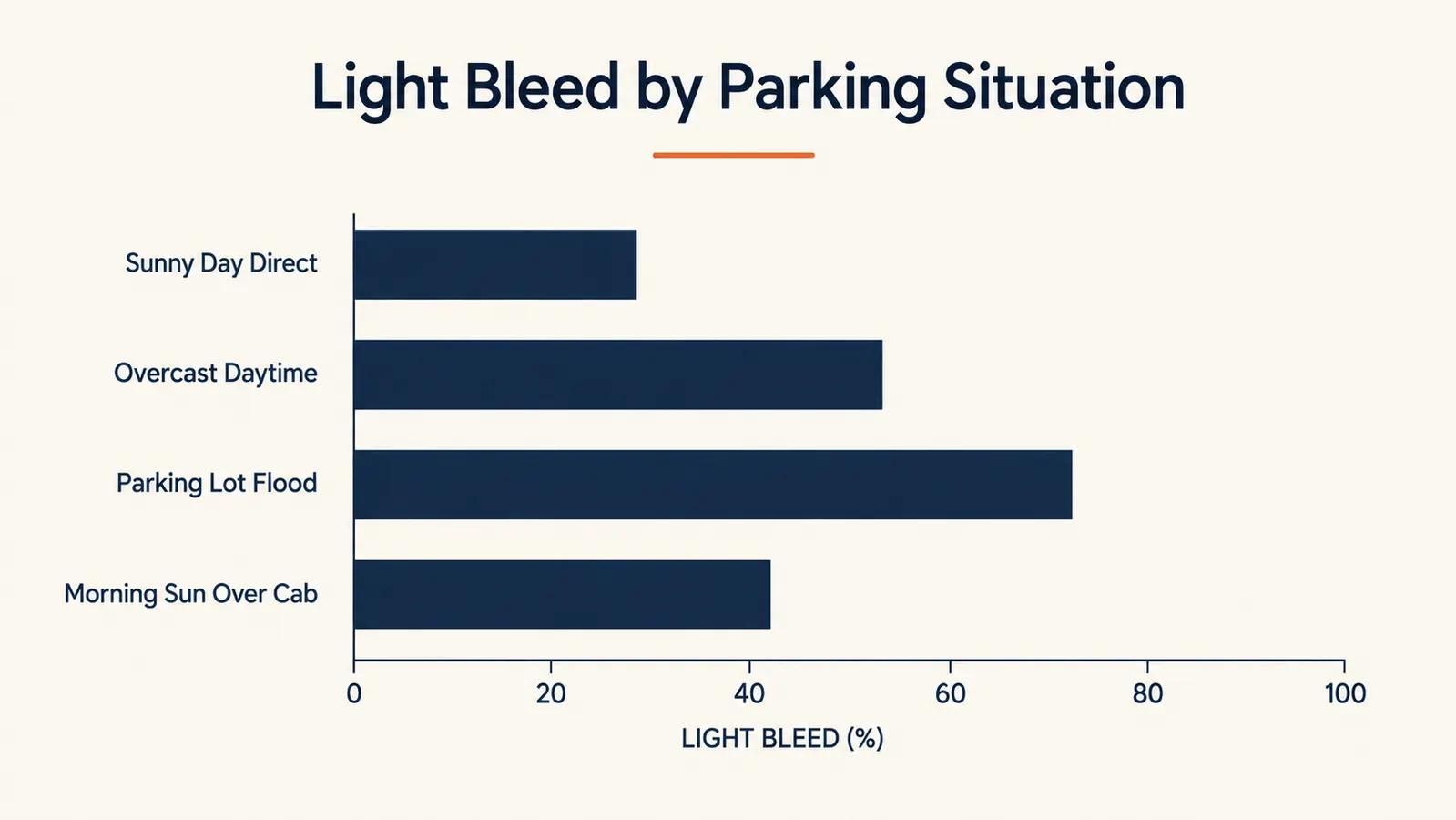
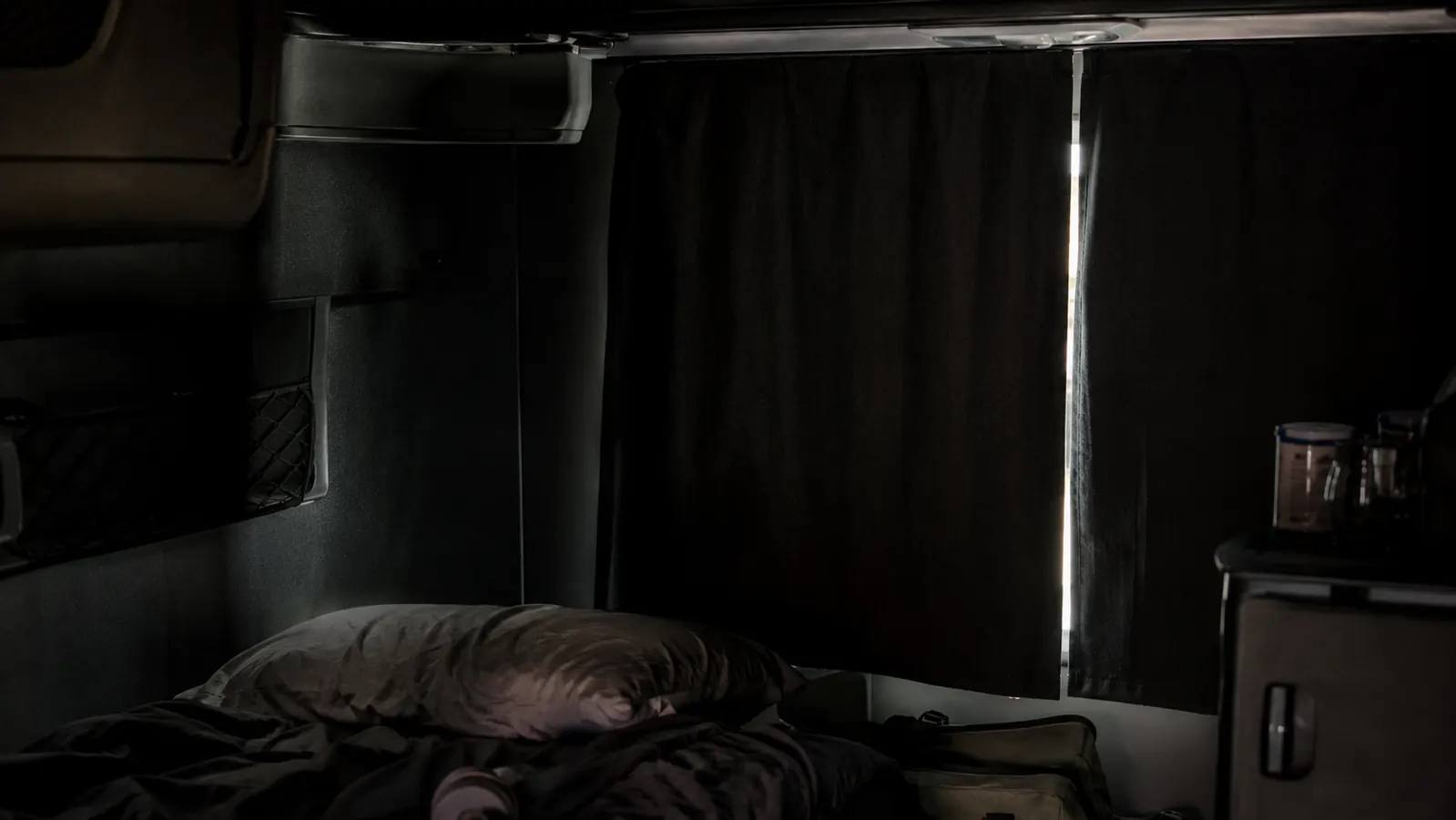
Let me be straight with you about what 'blackout' means in practice. If you park with the side of your truck facing directly into morning sun at a low angle, maybe 20 to 30 degrees above the horizon, you're going to see a glow around the edges where the curtain doesn't meet the window frame perfectly. That's physics. The fabric itself blocks light well. Triple-weave polyester, dense enough that you can't see any light through the panel material when you hold it up to a window. The light that gets in comes from the gaps, not through the fabric.
In practical terms: parked under a Flying J lot light at midnight, the sleeper gets dark enough that I can't see my hand. Overcast daytime sleeping in a dock yard, same result. Morning sun with the truck parked east-west, you get a thin bright line along the edge of the curtain if the panel isn't pulled snug. I dealt with this by adding two small binder clips to hold the panel edge against the window trim. Not elegant, but it works, and it cost me nothing.
The windshield is a separate problem. The NICETOWN panels only cover the side and bunk windows. Sun coming over the cab and through the windshield into the bunk area is not something curtains fix. For that you need a windshield sunshade or a cab divider curtain. I'll cover that in my piece on blackout curtains versus windshield sunshades for daytime sleeping if you want the full setup.
The fabric itself blocks light cold. Every bit of light that gets through comes from the edges, and that's a mounting problem, not a curtain problem. Fix the mount, you fix the light.
Mounting: Tension Rod vs Velcro, and What I'd Tell You
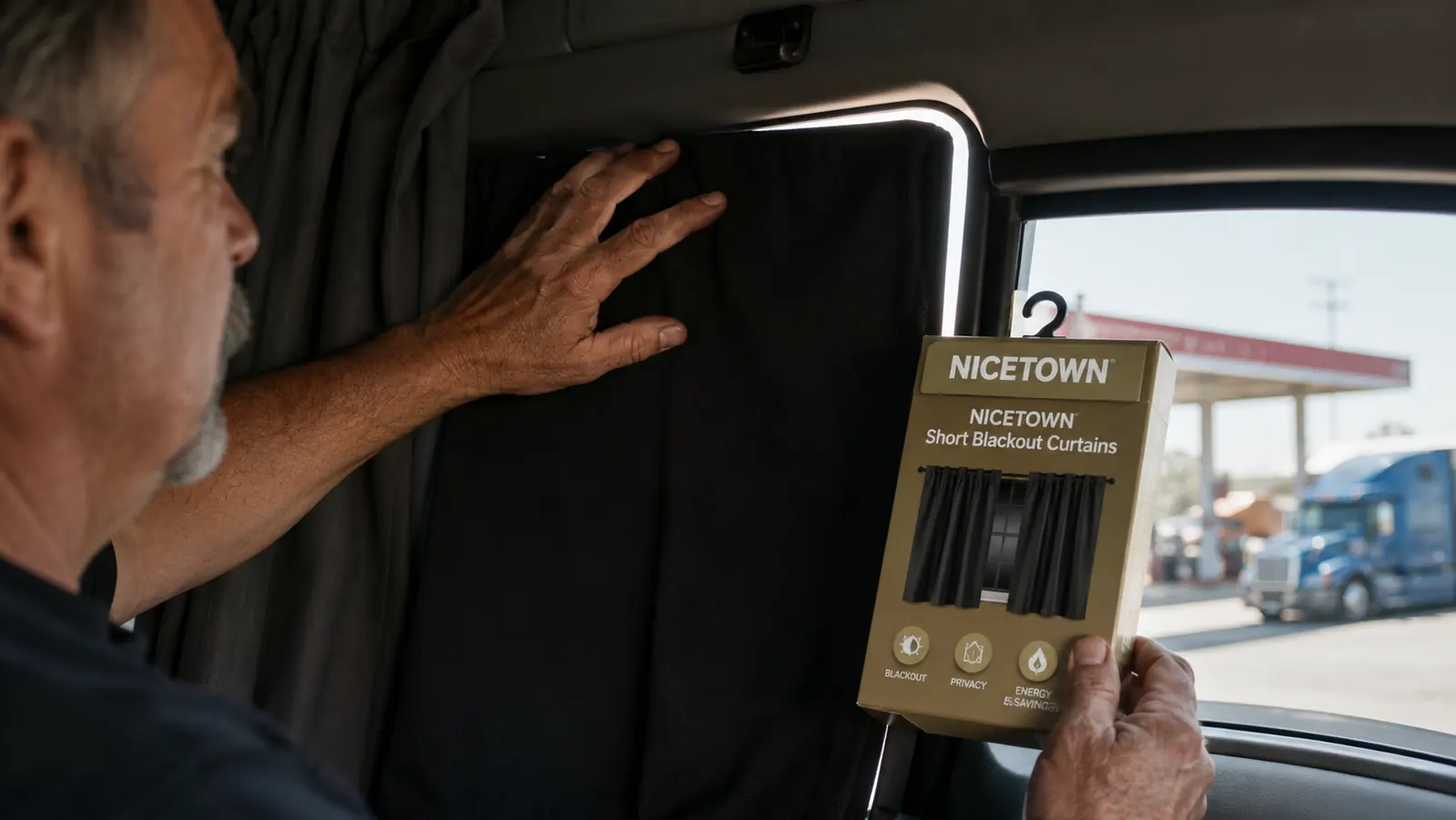
NICETOWN sells these with grommets along the top. You can run a rod through the grommets or you can use clip rings on a rod if you want easier removal. I run the rod through the grommets because it's simpler and there's less hardware to rattle loose on a rough road. The tension rod I used is a standard shower-style spring rod from a hardware store. Cost me about four dollars. I sized it to fit the interior window frame snugly.
The Velcro route works too. I talked to a driver at a Pilot in Knoxville who runs his NICETOWN panels with heavy-duty hook-and-loop tape stuck to the window trim. He said they stay flat and give a better edge seal because the panel lays against the trim instead of hanging free. Downside is the residue if you ever want to remove them, and some window trims don't bond well with adhesive. If you own your truck and don't care about the trim, Velcro gives a tighter fit. If you're leasing, stick to the rod.
After six months with the tension rod, I can tell you the panels have not fallen down once. Not on I-65 through construction zones. Not on that stretch of I-70 in Indiana where the road surface is actively trying to shake your truck apart. The spring tension holds, and the grommets haven't torn or deformed. That surprised me a little given the price.
Fabric Weight, Heat, and Whether They Help with Temperature
NICETOWN markets these as thermal insulated panels. There's a lining on the back that's supposed to help with heat retention and summer cooling. I am skeptical of most thermal claims for window treatments this thin, but I can tell you that in July heat in Tennessee, the cab felt noticeably cooler with the panels closed over my rest period versus without them. That's not a scientific test. I didn't run temperature probes. But I also didn't run the APU as hard to hold 72 degrees, and that's the real-world outcome that matters to me.
In winter, I parked at a rest area in Illinois in February. About twelve degrees outside. The panels were closed over my sleep period, and the bunk held heat better than usual. Again, that could be any number of factors. But the fabric is dense enough that it's not nothing as an insulator. Don't buy these specifically for insulation. Buy them for light blocking. If they help with temperature, treat that as a bonus.
One thing I did notice in cold weather: the rod contracts slightly and the spring tension loosens. Once in February the rod dropped about half an inch in the frame and the panel shifted. I pushed it back up and it stayed. Minor issue, but worth knowing.
Washing, Durability, and Six Months of Vibration
I washed mine twice. Once after a diesel smell got into the bunk area, and once after six months just to clean them up. Cold machine wash, low heat in the dryer, same as the tag says. Both times the panels came out looking the same as they went in. No shrinkage I could measure, no color change. The grommets stayed round and functional. Seams held.
The fabric after six months of road use looks about the same as it did new. There's some road dust that settles on anything in the cab, but that washes out. No fraying at the edges, no thinning of the weave in spots that get sun. For a sub-thirty-dollar curtain, the construction is better than I expected. I've spent more on gear that held up worse.
What I Don't Like
The edge gap issue I mentioned earlier is real and it's the main complaint I have. If you want true blackout, you need to address the edges, and the curtain as designed doesn't close against the window frame. That requires either Velcro, binder clips, or some kind of trim seal. It's a solvable problem but it means the out-of-box experience isn't quite what the word 'blackout' implies.
Also, these are not made specifically for semi trucks. They're residential bunk-style curtains that happen to work in sleeper cabs. The sizing options may not perfectly match your window without some adjustment. My 52-inch-wide panel covered my Cascadia side windows with overlap, but if you're in an older Kenworth or a Pete with different window geometry, measure twice before you order. Getting the wrong size is more of a problem with blackout curtains than with regular panels because every inch of uncovered glass lets in light.
What I Liked
- Fabric itself is genuinely light-blocking, no light penetrates through the weave
- Grommets survived six months of highway vibration and two machine washes without damage
- Thermal lining helps with cab temperature, especially in summer heat
- Price is low enough that buying a second set for the windshield area is still affordable
- Wide color and size selection means you can probably match your cab trim
Where It Falls Short
- Edge gaps require clips, Velcro, or other supplemental fixing for true blackout
- Not sized specifically for semi truck windows, measure carefully before ordering
- Tension rod tension loosens in very cold weather, may need a quick adjustment
- Windshield light bleed is a separate problem these panels do not address
Who This Is For
If you run nights and sleep days, and you're currently sleeping with stock curtains or nothing at all, these will make a real difference. I went from waking up groggy every two hours from light intrusion to getting through a full sleep cycle without interruption. That's the difference between being rested and being a liability on the road. At this price, there's no reason to stay with whatever came stock in your sleeper. Stock curtains are decorative. These actually do something. If you want a deeper walkthrough of how to set up a full light-blocking system in your sleeper, including what to do about the windshield, check my guide on how to block light for daytime sleeping in a semi sleeper.
Who Should Skip It
If you run days and park nights, you probably don't need blackout curtains at all. Regular stock curtains handle ambient lot light fine for most people. And if your main problem is heat rather than light, there are better investments first, like an APU upgrade or a better ventilation fan. The thermal benefit here is real but modest. Don't buy blackout curtains to solve a temperature problem. Buy them to solve a light problem.
Six months in a night-runner's Cascadia. These earned their keep.
NICETOWN blackout bunk panels are in stock on Amazon with fast shipping to most truck stops and terminals. Check today's price and pick the size that fits your sleeper windows.
Amazon Check Today's Price on Amazon →