
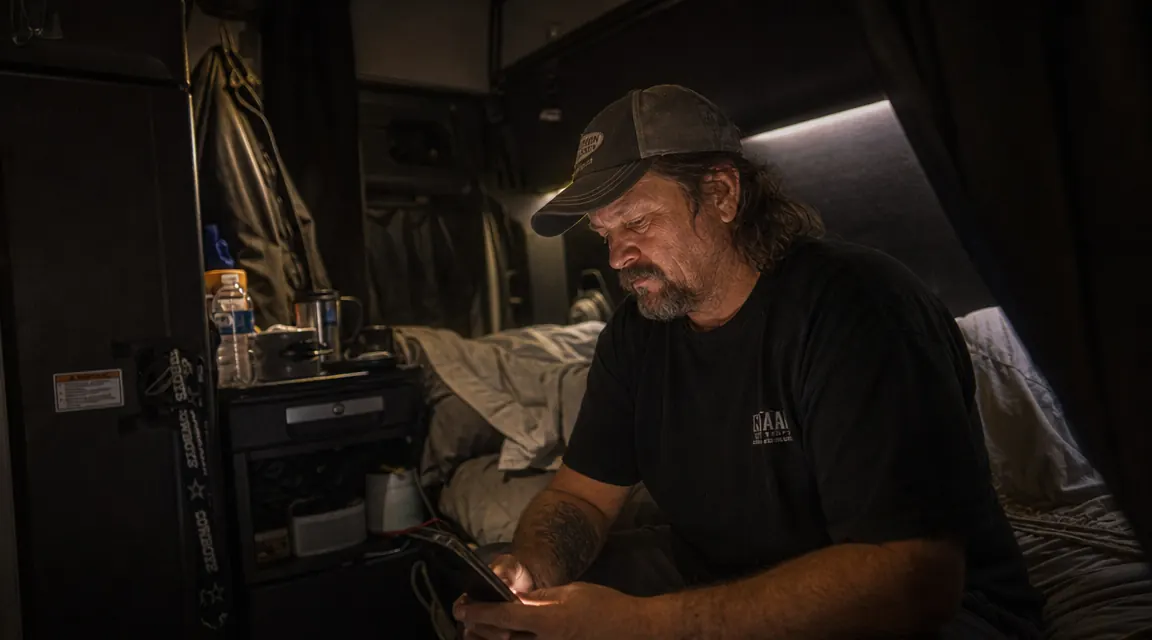
Let me tell you about the first thing I noticed when I opened the package: the smell. Not a faint plastic smell. A full, sharp chemical smell that hit me as soon as I pulled the panel out of the bag. I set the curtains on my bunk, cracked the sleeper vent, and went back to work. Two weeks later, maybe a little less, the smell was mostly gone. If you buy these and throw them straight up in your cab before airing them out, you will notice it every time you climb in the bunk for a while. That part does not show up in the Amazon reviews, at least not prominently. It showed up in my first five minutes.
I run a 2021 Freightliner Cascadia and I've been doing this job for going on 28 years. Sleep quality is not a nice-to-have. When you're pulling 600-mile nights and then trying to get six solid hours in a Petro parking lot at nine in the morning with the sun coming straight through the east-facing side windows, sleep quality is the job. I bought the NICETOWN Short Blackout Curtains, ASIN B0CQNMG5JP, because a driver on my terminal called them the best cheap fix he'd found. He was mostly right. But there are things he didn't tell me, and I'm going to tell you.
The Quick Verdict
Good blackout performance for the money, but they are designed for RV bunks, not semi sleepers, and the sizing gap will cost you daylight at the edges unless you measure twice and buy right.
Amazon Check Today's Price →If you're losing sleep to parking lot light, this is the fix that costs less than one truck stop meal.
NICETOWN Short Blackout Curtains are available on Amazon. Check today's price and whether they ship to a terminal near you.
Amazon Check Today's Price on Amazon →How I've Used Them and What I Actually Tested
I installed these in November and ran with them through the winter and into spring. That means cold nights in the upper Midwest, parking lots in Texas at midday, and a stretch through Nevada where the sun comes up at an angle that cuts right through whatever gap you leave at the bottom of a curtain rod. I tested them in different orientations: windows facing east, facing west, and once, parked sideways to a Flying J lot light that runs all night. I also paid attention to what happened to the rod setup over rough highway miles, which I will get to.
The curtains I bought are the 'Short' version, which runs about 24 inches wide per panel and 45 inches drop. I bought two panels, which is what you need for a standard sleeper side window setup. I used a standard spring tension rod across the bunk window opening. The listing describes them as RV bunk panels, which is accurate and also the first thing you need to understand about them.
I also checked the grommet line with a flashlight and a magnifying glass, because I am a mechanic by habit and I look at how things are stitched together before I trust them. That inspection gave me some things to say.
The Sizing Problem Nobody Warns You About
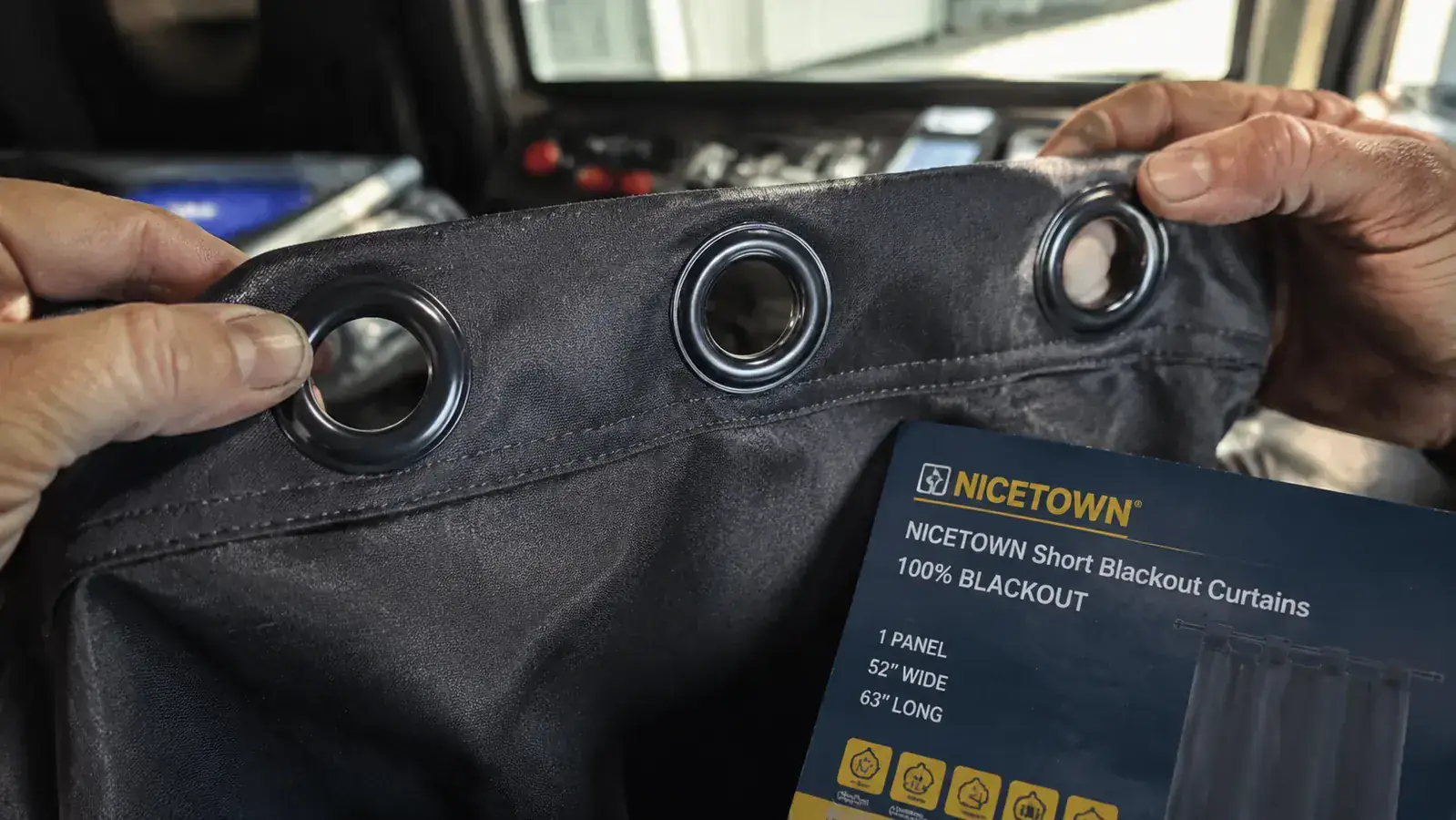
This is the part that matters most and gets the least attention in reviews. NICETOWN markets these as RV bunk curtains. Standard RV bunk windows run somewhere between 20 and 24 inches wide. Standard semi sleeper windows are a different story. My Cascadia's side bunk windows are 31 inches wide at the opening. That means a single 24-inch panel doesn't cover the window. It covers most of it. You hang it and you still have a 3.5-inch gap on each side unless you overlap two panels, which is what I ended up doing. Two panels overlapped gives you about 48 inches of coverage across a 31-inch window, which works if you use the overlap as your center seal. It looks a little awkward but it blocks the light.
The problem is that the Amazon listing does not tell you this. It says 'fits most sleeper cabs.' Most RV sleeper bunks, yes. Most semi sleepers, not without adjustment. Before you order, measure your window opening, not just the glass, but the full frame-to-frame width. If you're over 26 inches, buy two panels per window side and plan to overlap. If you measure 24 inches or under, one panel per side works and you're in good shape. I wish someone had told me that before I bought the first set.
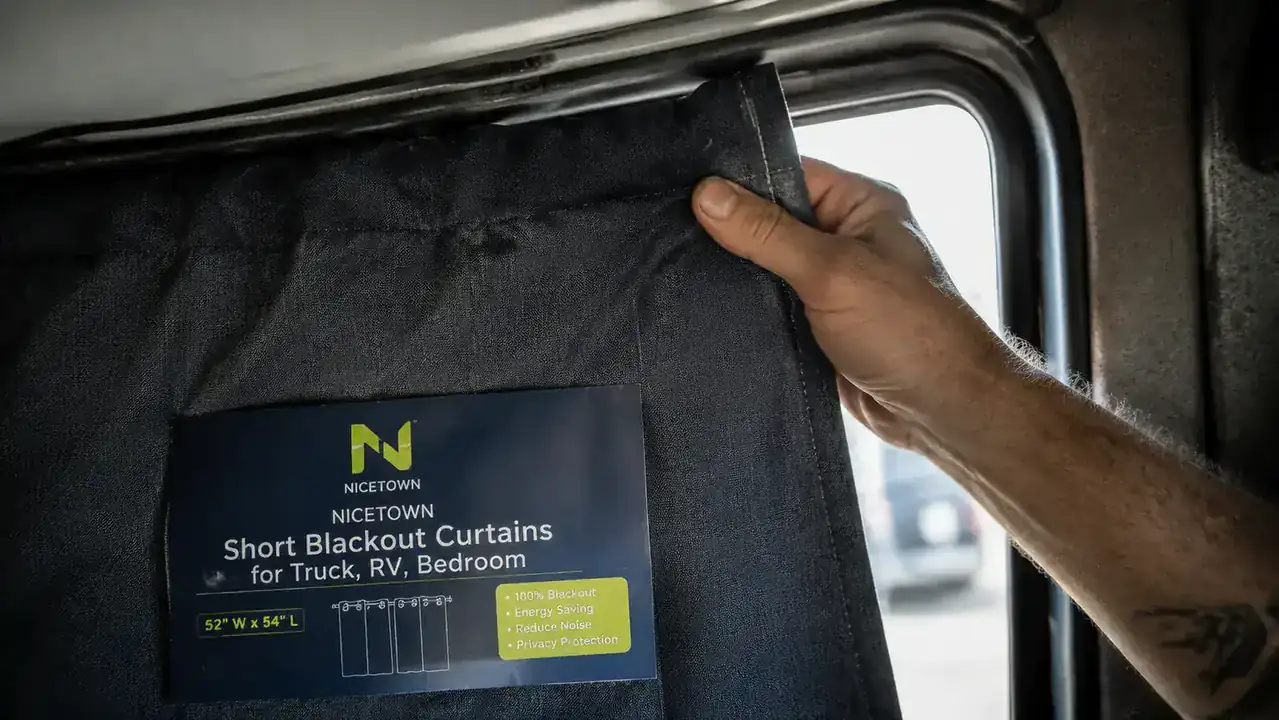
The Tension Rod and the Weight Limit
The standard spring tension rod I used holds up to about 1.5 pounds of curtain weight per side before it starts losing grip on the sidewall. The NICETOWN panels are light enough, around 0.6 pounds per panel, so two panels on a rod is well inside that range. That's fine. The problem isn't weight. The problem is vibration.
I ran a stretch of I-70 through Kansas in February with 35 mph crosswinds and some rough pavement near the construction zone east of Salina. That section vibrated the whole cab enough that the tension rod walked up the sidewall and dropped on me at about mile 240. The curtains fell, the rod clanged on the bunk frame, and I drove the next 80 miles with full daylight pouring in. The rod itself was fine. The contact points on the sidewall had gotten greasy from the wall finish and lost grip. I cleaned the contact points with rubbing alcohol and it held for the rest of the trip. That fix cost nothing, but I had to figure it out the hard way.
If your cab sidewalls have a slick finish, clean the rod contact points before you install. Use a light grip tape on the rod tips if you run rough roads regularly. I used a small strip of grip tape from my tool bag and haven't had a drop since. The curtains are not the problem. The installation method needs that one extra step in a truck environment that it wouldn't need in an RV parked in a campsite.
Clean the sidewall contact points before you set the rod. In an RV sitting still in a campsite, it doesn't matter. In a Cascadia doing 65 through Kansas in February, it matters.
The Fabric and What Happens to Your HVAC Vents
The NICETOWN panels are a triple-weave blackout fabric. It's decent material for the money. What I noticed after about six weeks is that the HVAC vent above the bunk started collecting a fine dark lint on the vent louvers. I wiped it off, it came back inside a week. When I pulled the curtain down and looked at it in good light, the fabric surface does shed some fiber, especially in the first few months while it's breaking in. The HVAC return pulls air across the curtain when the system is running and collects that shed fiber on the louver.
This is not a safety issue. It is a maintenance issue. I now wipe that vent down once every few weeks with a damp rag. Takes two minutes. But if you have a sleeper with a bunk vent that returns air close to where the curtain hangs, expect to add that to your cleaning rotation. The shedding slows down significantly after the first two months. My current set is past that break-in phase and the lint accumulation is minimal now.
Grommet Line Stitching: What I Found Under the Flashlight
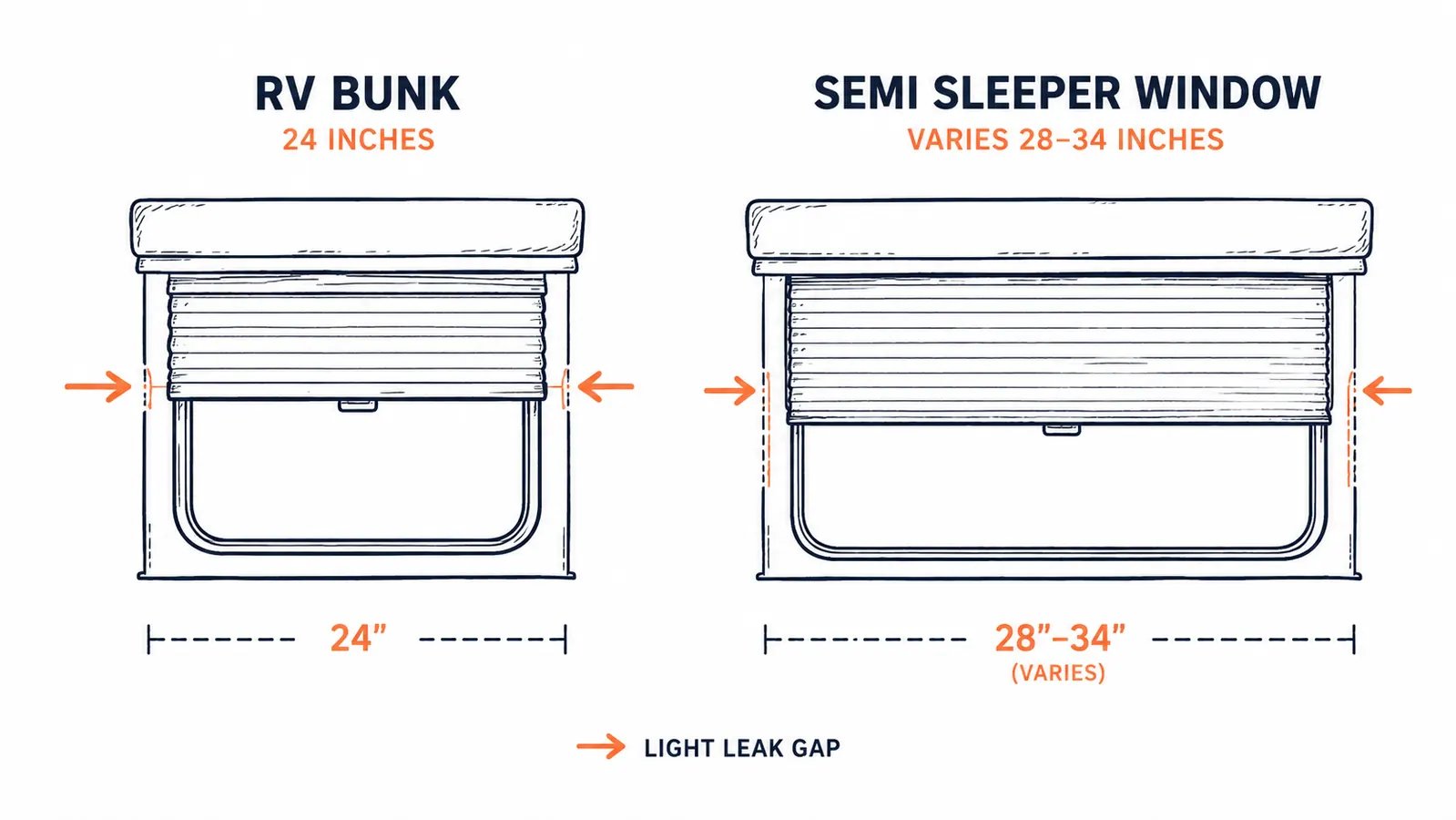
The grommet line is where I had the most to say after my inspection. The grommets themselves are solid metal, not plastic, which is good. The stitching pattern that holds the fabric fold at the grommet header is a basic lockstitch. On both panels I received, the lockstitch at the outermost grommet on each end was shorter than the stitch run on the interior grommets. That means the end grommets have a little less reinforcement at the stress point where the curtain hangs and takes lateral pull when the rod flexes.
After four months of regular use including the Kansas vibration incident, neither panel has shown any thread pulling or fabric separation at those end grommets. So in practice, the stitching has held fine. But if you're the kind of driver who throws these up and yanks them open and closed aggressively, be aware that the end grommets are the weakest point in the construction. Open and close them with a straight pull along the rod, not a diagonal tug. That's just good curtain practice and it extends the life of any panel.
How Dark Does It Actually Get
This is the question everyone wants answered, so I'll be specific. Parked in a Flying J lot at 10 AM in May, sun high and coming from the south, with the curtains properly installed and overlapped across a 31-inch window, the bunk goes from a 7 on a brightness scale to about a 2. You can still see the rough outlines of things in the bunk. You cannot read. You cannot see what time it is on your phone face-down without picking it up. The light that gets in is edge bleed, not fabric bleed, because the blackout weave is genuinely good. The triple weave does what it says.
The remaining light comes from two places: the gap at the bottom of the curtain where it doesn't quite reach the bunk surface, and the gap at the outer edges where the rod doesn't extend past the window frame onto the wall. Both of those are installation problems, not product problems. I addressed the bottom gap by tucking the lower edge of the curtain behind the mattress edge when I sleep. I addressed the side edge gaps by adding a 2-inch strip of self-adhesive foam weatherstrip to the wall at each rod end point, which blocks the edge bleed. Those two tweaks cost me maybe $4 in materials and 20 minutes of work, and the bunk is genuinely dark after that.
What I Liked
- Triple-weave blackout fabric actually blocks light through the panel, no bleed through the material itself
- Metal grommets, not plastic, and they've held through four months of daily use
- Lightweight enough for standard tension rods without weight limit issues
- At the current price point, two panels plus a rod is under $35 total
- Thermal insulation layer makes a noticeable difference on cold nights, the bunk holds heat better
Where It Falls Short
- Sized for RV bunks, not semi sleepers. Windows over 26 inches wide need two panels per side and an overlap strategy
- Chemical smell out of the box is real and takes about two weeks of ventilation to clear
- Tension rod walks on smooth cab sidewalls under highway vibration. Requires grip tape or an alcohol-wipe prep step
- Fabric sheds lint in the first two months and deposits on HVAC vent louvers near the bunk
- End grommet stitching is shorter than center grommet stitching. Pull straight, not diagonal
The Smell: How Long and What Helps
I want to come back to this because it was the first thing I noticed and I think it deserves its own section. The smell is a combination of the blackout coating on the triple-weave fabric and whatever the packaging material off-gasses during shipping. It is not a mold smell or a burned smell. It's a synthetic, slightly plastic chemical smell. Strong in the first few days, noticeable through about day ten, mostly gone by day fourteen in my experience.
What helps: hang the panels somewhere with airflow before you install them. I hung mine on the grab handle on the outside of my cab door for a day and a half while I was on a loaded run through some decent wind. That knocked the intensity down significantly. If you live in an apartment between runs and can hang them near an open window for 48 hours before installing, do that. Do not hang them straight out of the bag inside a closed sleeper cab before airing them out. The small space concentrates the smell in a way that makes it unpleasant to sleep in.
Who This Is For
These curtains are a good fit for any sleeper cab driver who runs days with the sun up and needs to sleep, as long as you go in knowing the sizing realities and are willing to do two minor installation tweaks: grip tape on the rod tips and edge weatherstrip to kill the bleed. If you are buying for a standard RV bunk they fit straight out of the package with no fuss. If you are buying for a semi sleeper, measure your window first, plan for the overlap strategy, and air them out before install. With those adjustments made, they do the job well for the price.
Who Should Skip It
If you want a plug-and-play curtain solution with zero installation figuring, these are not it for a semi sleeper. The product is genuinely designed for RV applications and the semi sleeper adaptation requires a few steps that are easy but not obvious from the listing. If you're also sensitive to chemical smells and can't air things out before use, the first two weeks will be rough. And if your bunk window is wider than 30 inches, do the math on panel count before you order or you'll make the same mistake I did with the first set.
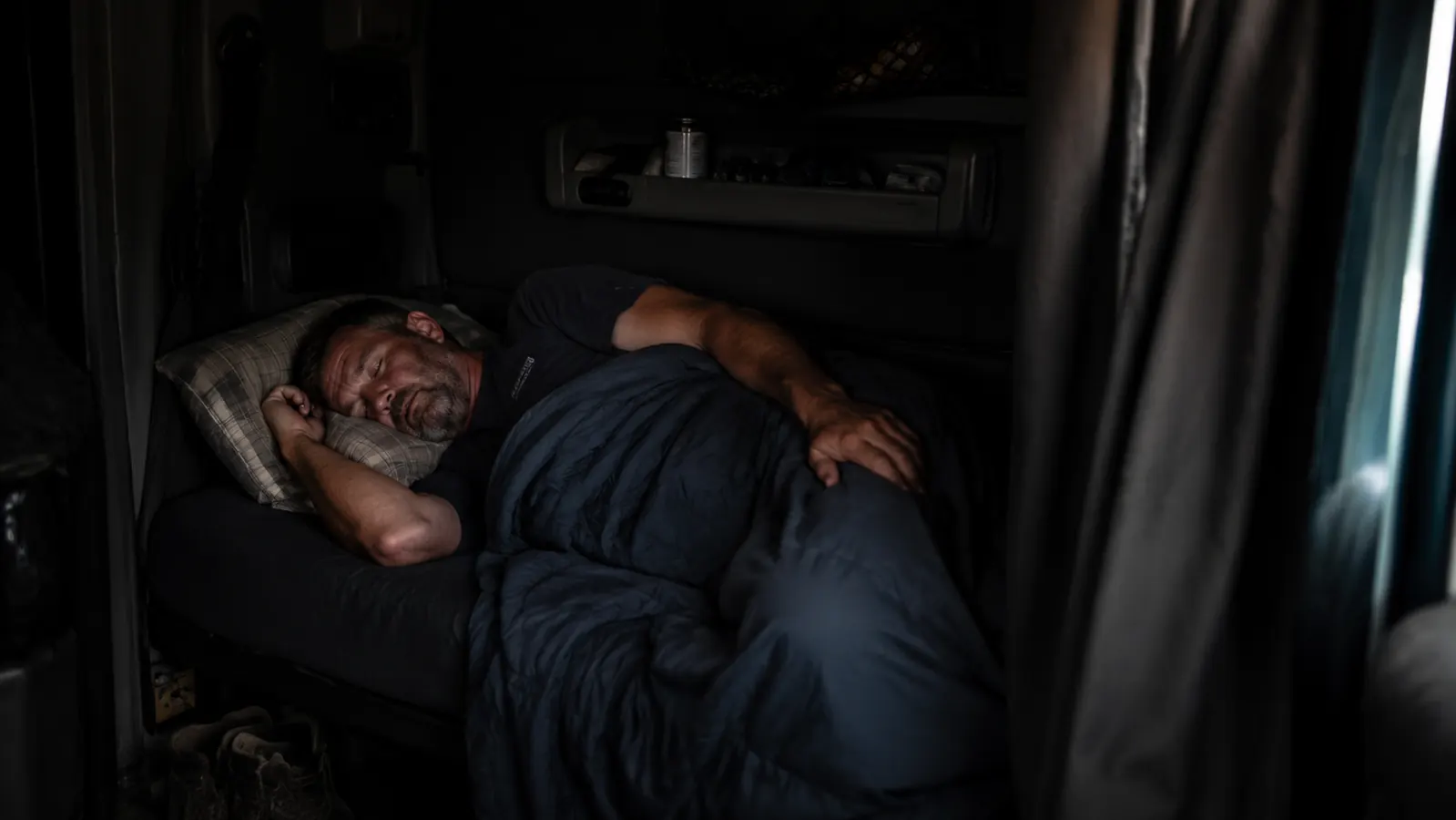
Measure your window first, then check today's price. Two panels is usually the right call for a semi sleeper.
NICETOWN Short Blackout Curtains on Amazon. Solid blackout performance for the money, with the installation notes above in hand.
Amazon Check Today's Price on Amazon →